

I used to think blockchain infrastructure competed on the same surface: faster finality, cheaper execution, deeper liquidity. Then I spent more time with Newton Protocol and noticed it is asking a quieter question. Who is allowed to make the transaction before the chain is asked to settle?
That sounds boring. But it may be the part institutions care about most.
Public chains are good at saying what happened. They are weaker at proving why something was permitted. A smart contract can enforce its own logic, but finance carries rules that live outside one contract: sanctions checks, investor eligibility, spending limits, jurisdiction rules, source-of-funds risk. Today those checks often sit in frontends, databases, or compliance APIs. They influence behavior, but not always execution.
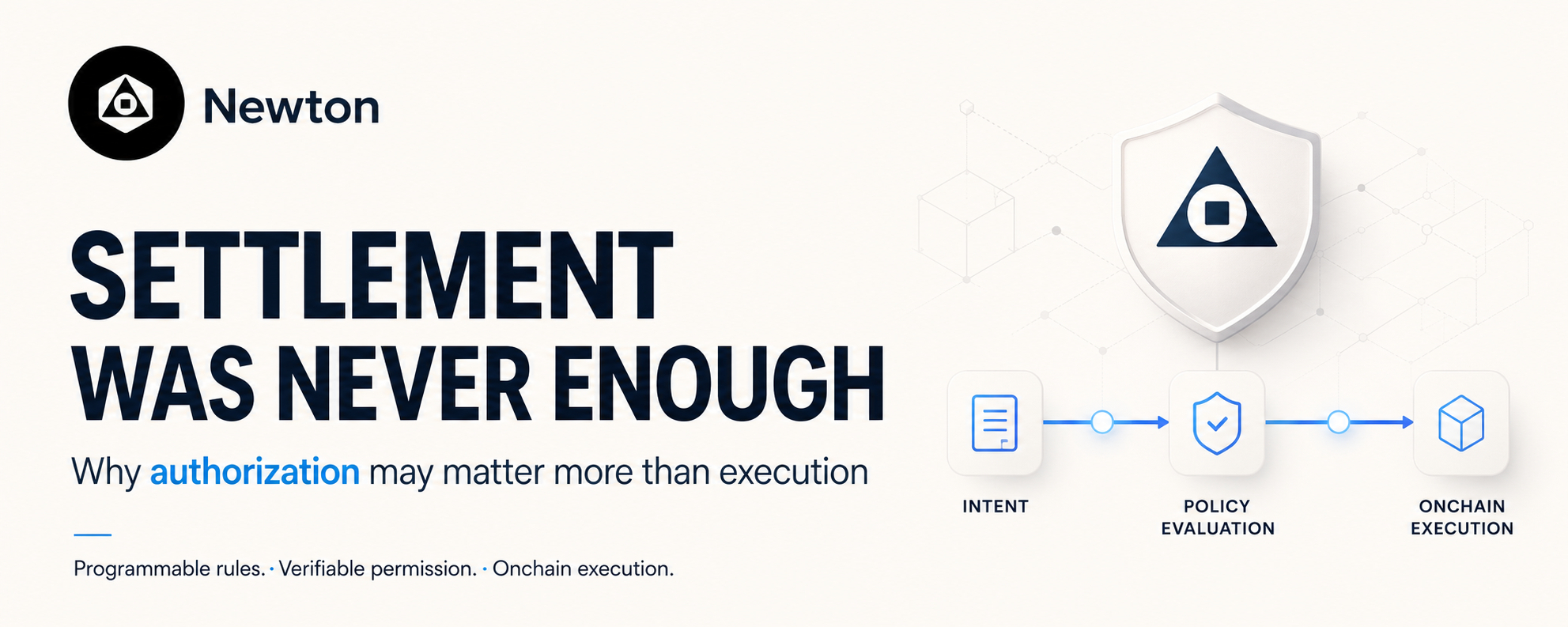
Newton separates authorization from settlement without pulling activity back into a closed system. An app sends a transaction intent to Newton. Operators evaluate that intent against Rego policies. If enough staked operators agree, the result becomes a BLS aggregate attestation. The smart contract can require that attestation before it executes.
Newton is trying to turn “we checked this somewhere” into “this transaction carried verifiable permission at execution time.” That difference matters. A bank, an RWA issuer, or treasury manager does not only need compliance theater. They need evidence that survives audit, disputes, and changing vendors. Newton’s compliance receipts record which policy was applied, what outcome was signed, and when it happened, while sensitive identity data stays off the public chain.
The behavior change could be subtle. Users may not route through Newton because it feels exciting. They may route through it because counterparties accept it, auditors understand it, and developers can compose policies instead of rebuilding controls for every chain. After incentives fade, that boring repeat usage is often what matters.
Still, there is a real tradeoff. Newton depends 0n policy quality, data-provider reliability and an operator set that is decentralized enough to be credible but permissioned enough to be accountable. Too much control and it starts to feel like familiar middleware. Too little accountability and regulated users may not trust it.
What I like is that the thesis is not pretending settlement alone fixes finance. It accepts that the next phase of onchain markets may need permission that is programmable, private, and independently checkable. I keep thinking about how unglamorous that is. Also how necessary.
#NEWT #Newt #newt $NEWT @NewtonProtocol
