
You take a clean setup. The structure looks right. You enter. Price moves against you, hits your stop, and you are out. The loss is small. The plan worked exactly as it should — you were wrong, the stop protected you, the damage was tiny.
 And then something strange happens inside you. You do not feel like waiting for the next clean setup. You feel like getting that money back right now. And the next trade you take is bigger, faster, and far less careful than the one before it.
We have watched this single moment destroy more accounts than any bad strategy ever could (and we talk from personal experience). So let us talk about what is actually happening — and why the urge you feel is lying to you.
The Loss Is Not the Problem. The Next Trade Is.
Here is the part most traders never understand.
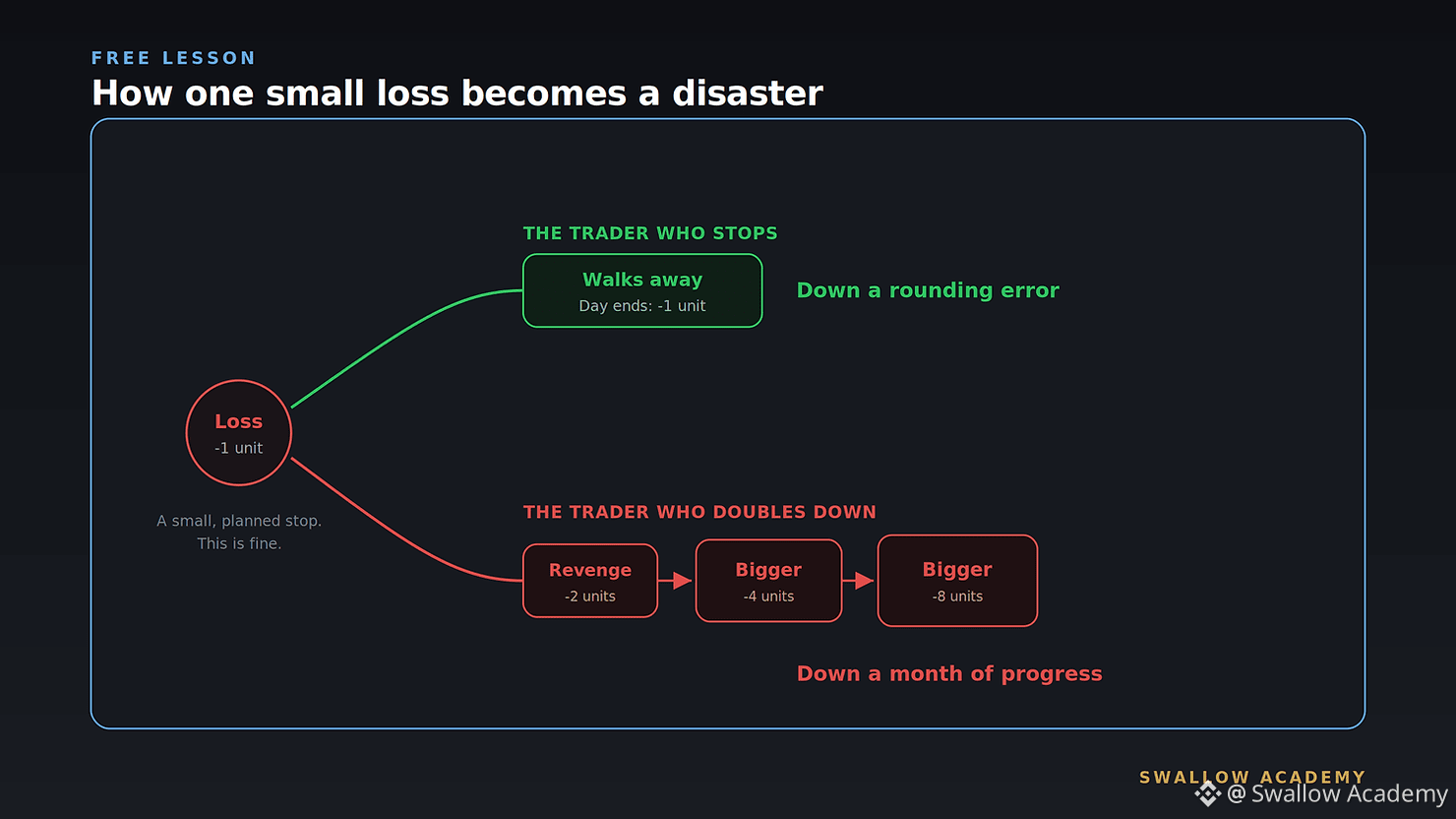
A single stop-loss, sized correctly, is nothing. It is a rounding error. You can take ten of them in a row and still be completely fine, because each one only costs you a small, fixed amount. That is the entire point of a stop — to make being wrong cheap.
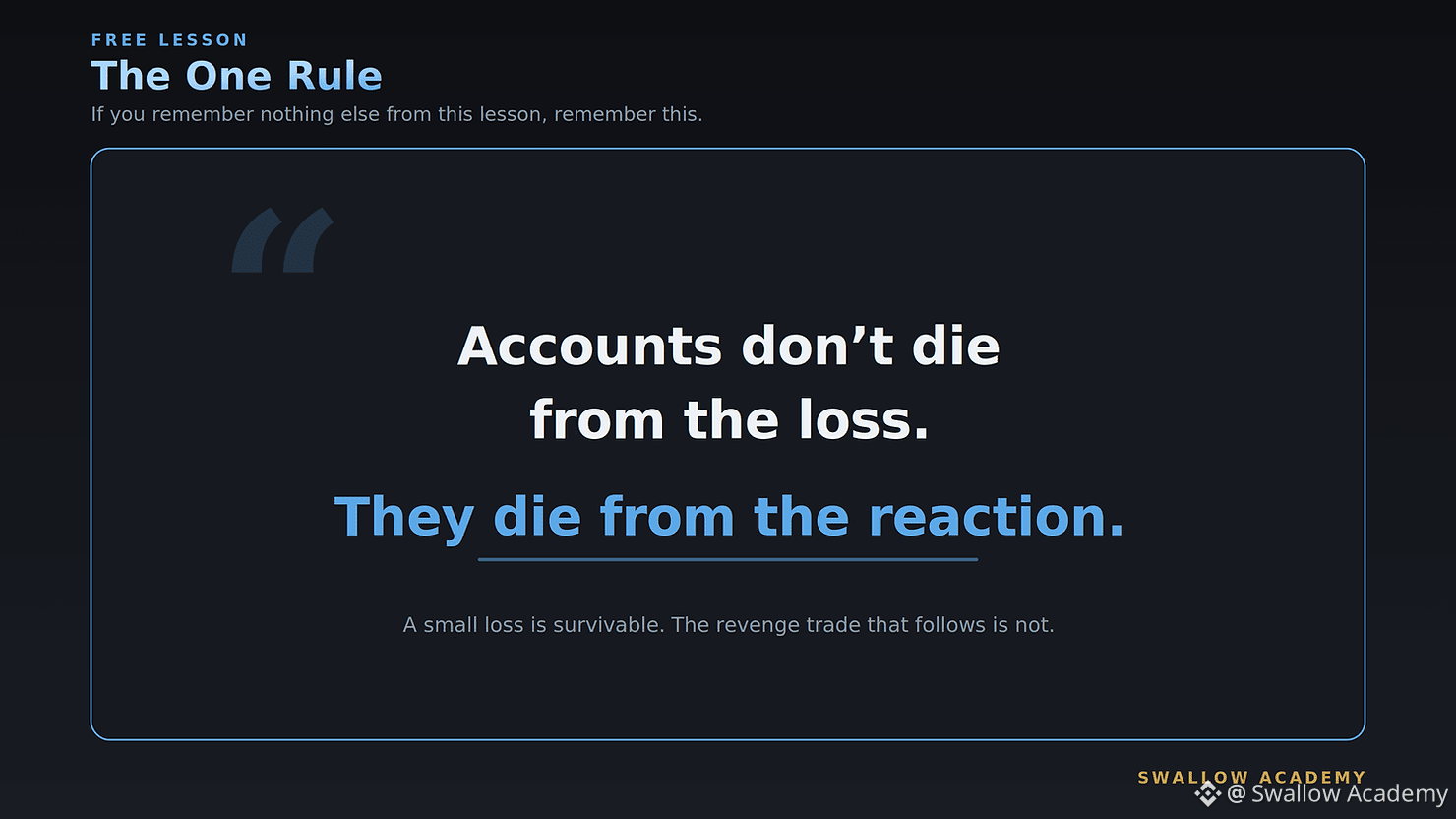
 Accounts do not die from losses. They die from the reaction to losses.
The first loss costs you one unit. The revenge trade that follows — bigger size, no real setup, entered out of frustration — can cost you five. And when that one fails too, the next one is bigger still. Within an hour, a trader who lost one small, planned amount has lost a quarter of the account chasing it.
Why Your Brain Pushes You Toward the Cliff
The urge to double down is not weakness. It is wiring.
When you take a loss, your brain does not file it as "a normal cost of doing business." It files it as a threat — something to be corrected immediately. The same instinct that once kept humans alive now whispers that you must act now to make the bad feeling go away.
And the fastest way to make the feeling go away, your brain decides, is to win the money back on the very next trade. So it pushes you toward a bigger position, because a bigger position could erase the loss in one move.
Notice what just happened. The decision was not made by the part of you that reads charts. It was made by the part of you that wanted to stop feeling bad. That is the most expensive trade you will ever take — the one designed to fix a feeling instead of read a market.
The Quiet Truth About Good Traders
People assume professional traders feel calm after a loss. They do not.
They feel the same urge you do. The difference is that they have learned a single, unglamorous skill: they do not act on it.
They have accepted something that beginners fight against — that losses are not failures to be corrected, but a normal, expected, budgeted part of the job. A losing trade for them is not an emergency.
When the urge to double down arrives, they recognize it for what it is — a feeling, not a signal — and they let it pass without touching the keyboard. That is the entire skill. Not the absence of emotion. The refusal to trade on it.
What This Costs the Average Trader
Look honestly at your own worst days.
We would guess that your biggest losses almost never came from a single bad trade. They came from a sequence — one loss, then the angry trade to fix it, then a bigger one to fix that, each entry worse than the last, all taken inside a short window where you stopped reading the chart and started trying to win.
That is the pattern. One small, acceptable loss, turned into a disaster by the refusal to accept it.
The trader who simply stopped after the first loss would have ended the day down a rounding error. The trader who doubled down ended it down a month of progress. Same setup. Same market. The only difference was what happened in the ten minutes after the stop.
Final Take
The urge to double down after a loss will not disappear. You will feel it for as long as you trade. The goal was never to stop feeling it.
The goal is to recognize it the moment it arrives — this is the feeling, not the trade — and to do nothing. Close the platform. Walk away from the screen. Let the loss be what it was always meant to be: small, planned, and already over.
Swallow Academy