

Let me ask you something.
When ChatGPT gives you an answer — do you know whose data trained it? Do those creators get paid?
No. And that's a $375 billion problem.
🔬 Enter: Proof of Attribution (PoA)
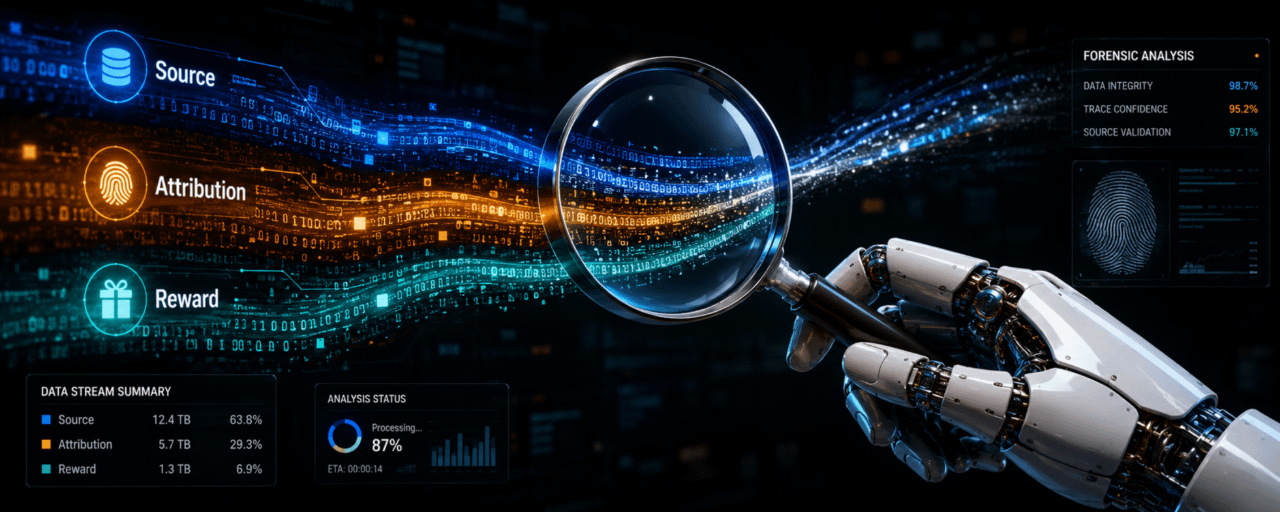
OpenLedger's Proof of Attribution is the first protocol that tracks — on-chain — exactly which data influenced which AI output. Think of it like a royalty system for AI.
Every time your dataset gets used in a model inference, the protocol registers it. You get rewarded. Automatically.
📊 How Does It Work Technically?
OpenLedger uses two approaches:
Influence-function approximations for smaller models
Suffix-array-based token attribution for LLMs — checking output tokens against compressed training corpora
The influence score becomes the basis for inference-level payouts. This isn't vaporware — it's in their whitepaper.
🌍 Why This Changes Everything
Right now, AI companies operate black boxes. OpenLedger creates:
Explainability — trace any model answer back to source data
Fairness — creators get paid every time their data drives results
Compliance — clear provenance records for licensing and auditing
🔗 Real-World Impact
OpenLedger partnered with Story Protocol in January 2026 to build a legal IP layer — where AI can be legally trained on copyrighted data, with automatic payments to rights holders. This is the future of AI licensing.
For the first time, data creators are stakeholders, not victims.
💡 The Bigger Picture
If you believe AI will be the dominant technology of the next decade, then owning infrastructure that makes AI fair and transparent isn't just ethical — it's smart investing.
$OPEN isn't just another token. It's a claim on the AI data economy.
Are you positioned? 🤔
