
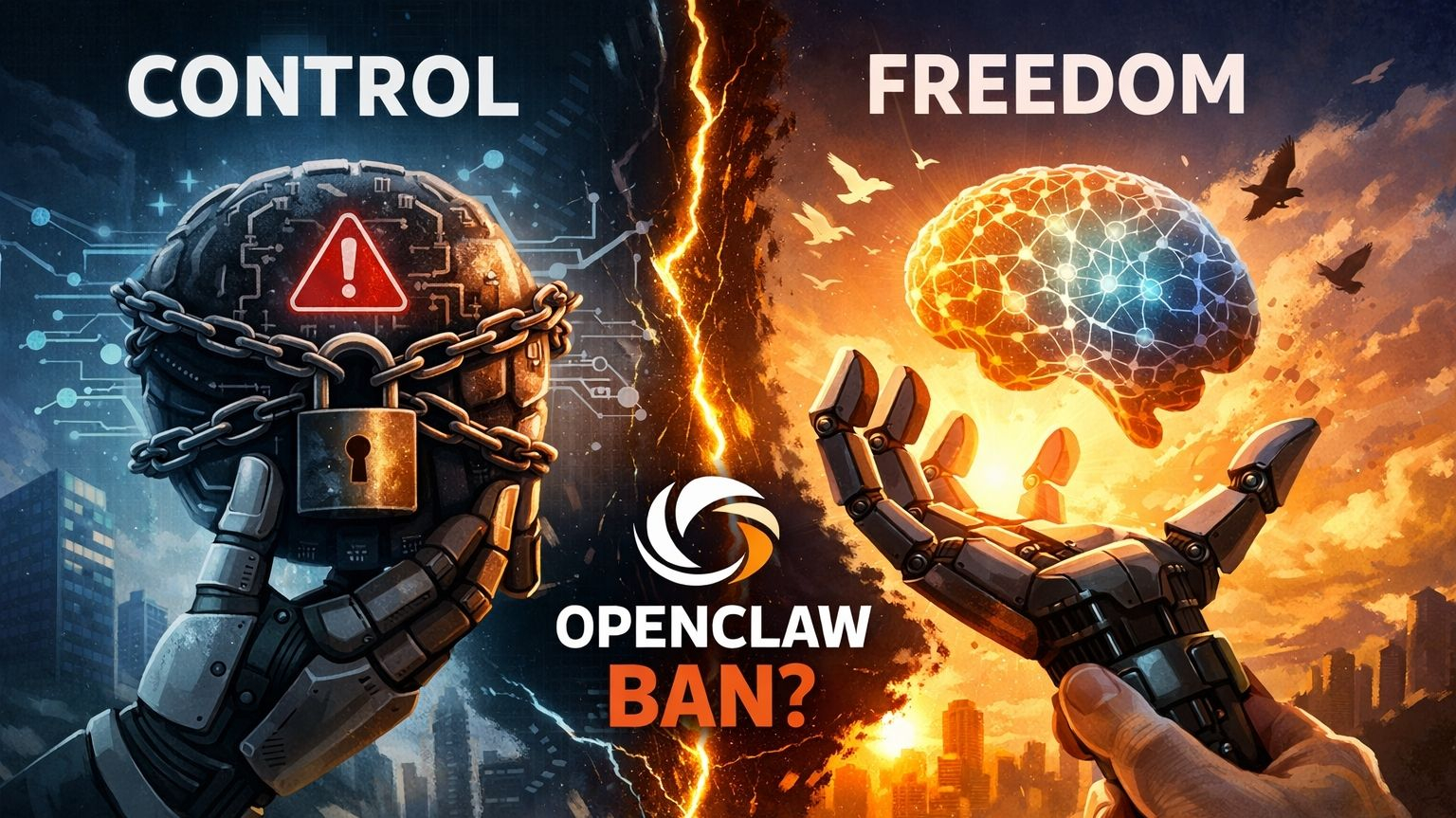

I still remember the moment I realized AI was no longer just about intelligence—it was about control.
It happened during a quiet conversation with a developer friend who had been experimenting late into the night, trying to push the limits of what AI could do.
He wasn’t building anything dangerous, just exploring possibilities, but something felt different this time.
“They don’t just build the models anymore,” he said, “they decide how far you’re allowed to go with them.”
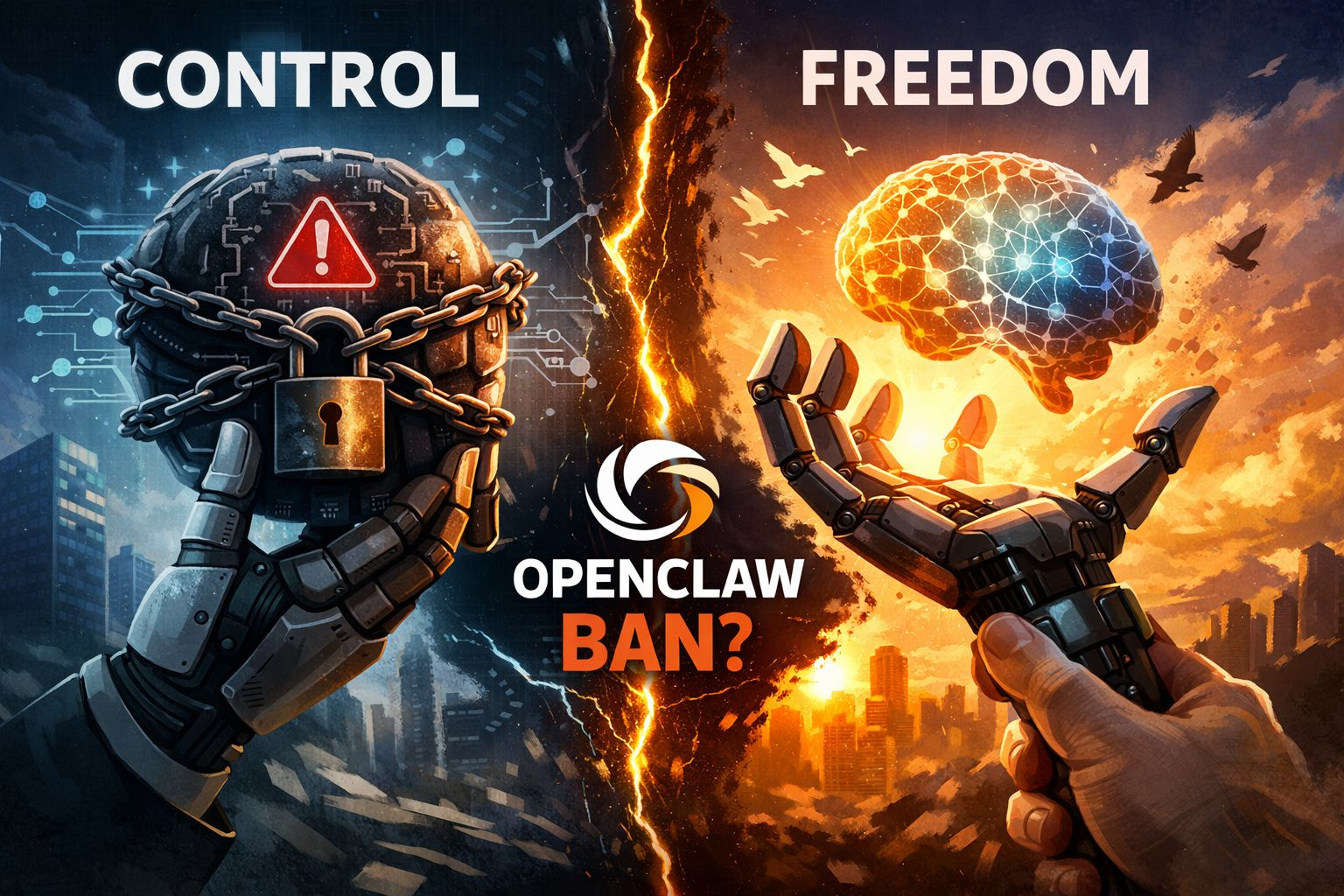
That line stayed in my head, especially when I heard about banning OpenClaw from interacting with its systems.
At first, it sounded like a routine safety decision, the kind companies make to protect their technology from misuse.
After all, systems like are designed with guardrails for a reason—to prevent harmful outputs and reduce risks in an unpredictable world.
From that perspective, blocking tools that attempt to bypass those safeguards feels logical, even responsible.
But the more I thought about it, the more it felt like something bigger than just safety.
It felt like a quiet shift in power.
Because safety, in the world of AI, is not just protection—it’s also permission.
And permission means someone, somewhere, is deciding what you’re allowed to build.
I started noticing how different the AI space feels today compared to just a few years ago.
Back then, it felt open, experimental, almost chaotic in a way that sparked creativity.
Developers weren’t just users—they were explorers, constantly testing boundaries and discovering new ones.
There was a sense that anyone could contribute, anyone could shape the direction of the technology.
But now, things feel more structured, more controlled, more… filtered.
Access is limited.
Capabilities are curated.
And innovation, in many cases, happens within predefined boundaries set by a handful of powerful organizations.
The OpenClaw ban isn’t just an isolated event—it’s a signal of that transformation.
A move from open ecosystems toward carefully managed environments.
And while that might make AI safer, it also raises an uncomfortable question.
What happens to ideas that don’t fit within those boundaries?
What happens to the experiments that are never allowed to begin?
Because innovation doesn’t always look safe at first.
Sometimes it looks messy, unpredictable, even risky.
That’s often where the biggest breakthroughs come from.
At the same time, I can’t ignore the other side of the story.
Unrestricted AI is not a harmless playground anymore.
These systems are powerful enough to influence people, shape narratives, and automate actions at scale.
Without guardrails, the risks are real—and they’re growing.
So the push for control isn’t just about dominance—it’s also about responsibility.
It’s about preventing misuse before it happens.
It’s about protecting users in a world where technology moves faster than regulation.
And in that sense, companies like are not entirely wrong.
But that’s where the tension begins.
Because too much control can quietly limit the very innovation these systems were meant to enable.
When every capability is filtered and every interaction is monitored, exploration starts to feel restricted.
Developers stop asking “What can this do?” and start asking “What am I allowed to try?”
And that shift, subtle as it seems, changes everything.
It transforms AI from a tool of discovery into a system of permissions.
I keep thinking about what this means for the future.
Are we building an open technological frontier, or are we constructing digital walled gardens?
Will the next generation of innovation come from unrestricted experimentation, or from carefully approved use cases?
And perhaps the most important question of all—who gets to decide?
Because behind every restriction is a decision.
And behind every decision is a concentration of power.
The OpenClaw situation isn’t just about one tool being blocked.
It’s about the invisible boundaries being drawn around an entire ecosystem.
Boundaries that define what is possible, and what is not.
We are entering a phase where AI is no longer just built—it is governed.
Where creativity exists, but within limits.
Where freedom is present, but conditional.
And where control, quietly but steadily, shapes the direction of progress.
I don’t think this battle between control and freedom will ever fully resolve.
It will evolve, shift, and reappear in different forms as technology advances.
But moments like this make it visible.
They remind us that the future of AI isn’t just about what machines can do.
It’s about what humans choose to allow.
And in that choice lies the real power shaping everything that comes next.