
When I first realized the goal of the ROBO, it wasn't just another flashy robotics project. In a market saturated with AI alternatives, automation buzzwords, and a deluge of crypto, most projects promise intelligence and scalability. But ROBO made me think about something less exciting, but more important: verification.
Machines are already capable of doing real work. Robots can move packages in warehouses, inspect hazardous environments, assist surgeons, and perform tasks that humans cannot or should not do. But despite these capabilities, a strange loophole exists in the system. Robots create value, but the records of this work are often locked to enterprise servers or proprietary platforms.
This problem becomes apparent once machines begin to interact with the broader economic system.
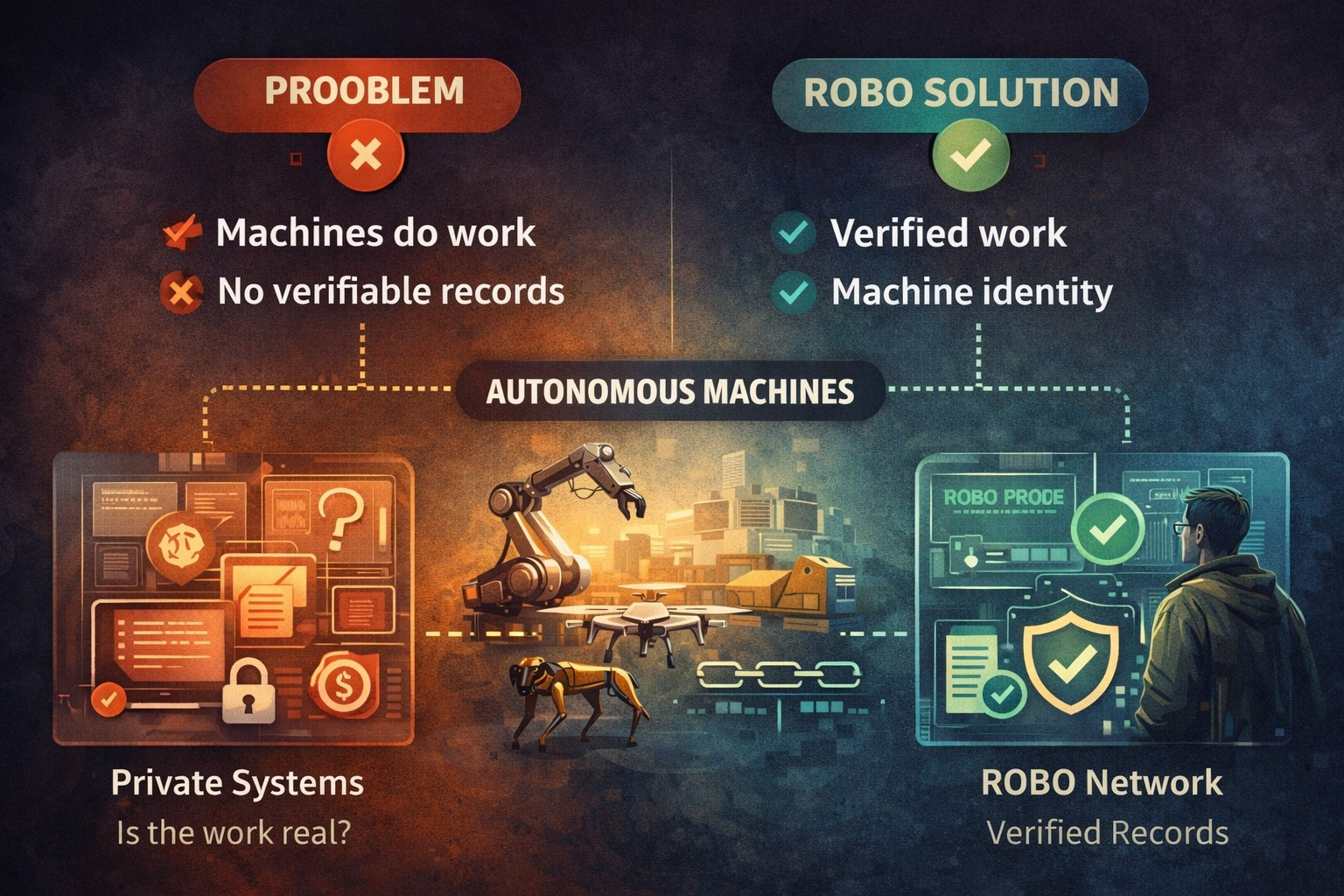
If a robot completes a task, who verifies that it actually did it?
Which machine performed the task?
Can other systems verify the results?
These questions may seem trivial, even tedious, but they are precisely where many ambitious machine economy concepts begin to crumble.
What impressed me most about ROBO was its design, which seems to be a direct response to this challenge. The framework doesn't just focus on smarter robots or faster automation; it emphasizes machine identity, verification, and a structured work log. In other words, the infrastructure layer it builds makes machine activity easily understandable enough to earn the trust of the economic system.
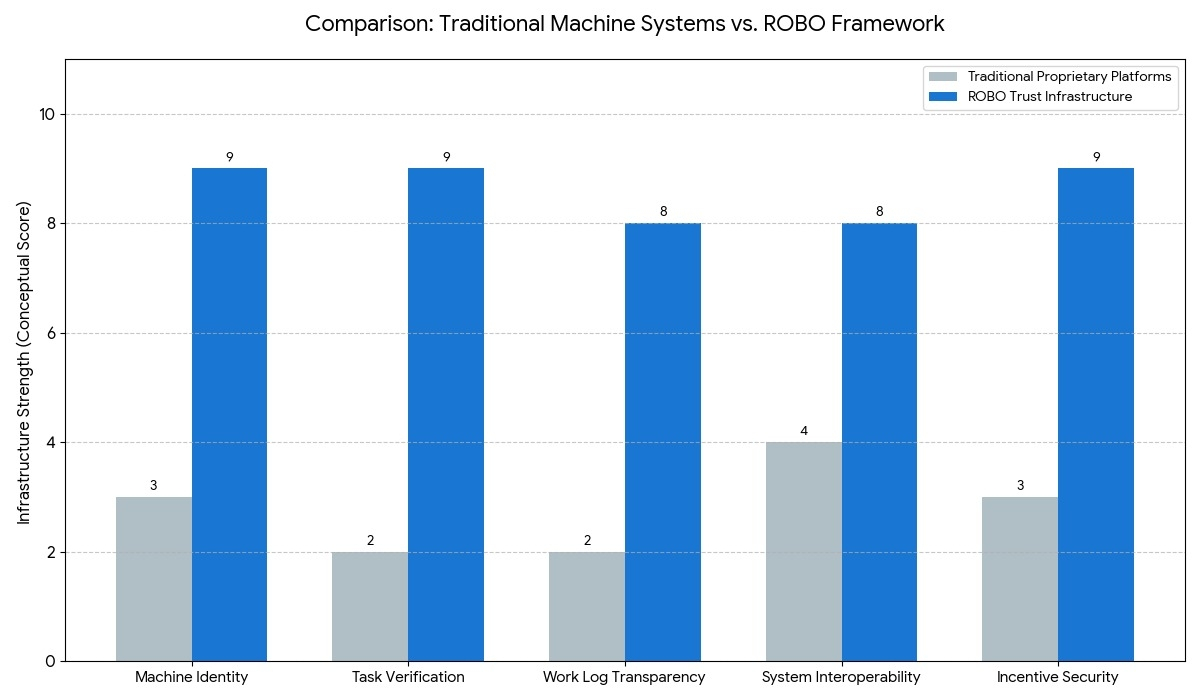
This might not sound appealing, but infrastructure is often not like that.
In many ways, the real challenge isn't how to get machines to perform tasks, but how to build a system that can verify, reward, challenge, and record those tasks in a way that people truly trust. Once incentives are introduced, every network faces the same risks: activity manipulation, metric manipulation, and weak verification systems collapsing under pressure.
ROBO seems to recognize this paradox.
It views machine work as something to be built, not a spectacle. Identity, proof of activity, and blockchain records construct a framework that enables machines to participate in open economic systems, rather than isolated corporate environments.
Of course, recognizing the problem is much easier than solving it.
Many projects seem promising at the conceptual stage, but struggle to move forward once the actual incentives are in place. Networks only truly matter when they reflect real-world behavior—chaotic, imperfect, and difficult to measure.
This is why I'm watching the ROBO project with cautious curiosity.
Not because it seems inevitable, and certainly not because the market has suddenly become rational. Rather, it seems to aim to solve a genuine coordination problem: how do machines prove their worth in a system where trust cannot be assumed?
If this project can successfully translate this idea into reproducible metrics of machine activity, it could be more than just another innovation story in robotics.
Until then, it remains, like many interesting infrastructure projects, a serious attempt to solve a complex problem for which the market has yet to find a definitive solution.
