

It’s early 2026 and everywhere I look in the crypto world, folks are talking about one newcomer with a decidedly different vibe: the ROBO token. This isn’t another meme coin or a “DeFi 2.0” gimmick. Instead, ROBO is part of something much bigger a push to simplify how autonomous machines, developers, and human stakeholders interact onchain in a way that might actually matter long term.
At its core, ROBO is the native utility and governance token of the Fabric Protocol, a network built not just for finance but for the real economy of autonomous agents robots, AI systems, and the software that connects them all. The idea behind Fabric is bold: create an open, shared infrastructure where robots from different manufacturers can verify identities, perform paid work, pay fees, and coordinate tasks without centralized silos. It’s infrastructure rather than speculation and that’s exactly why developers are watching closely.
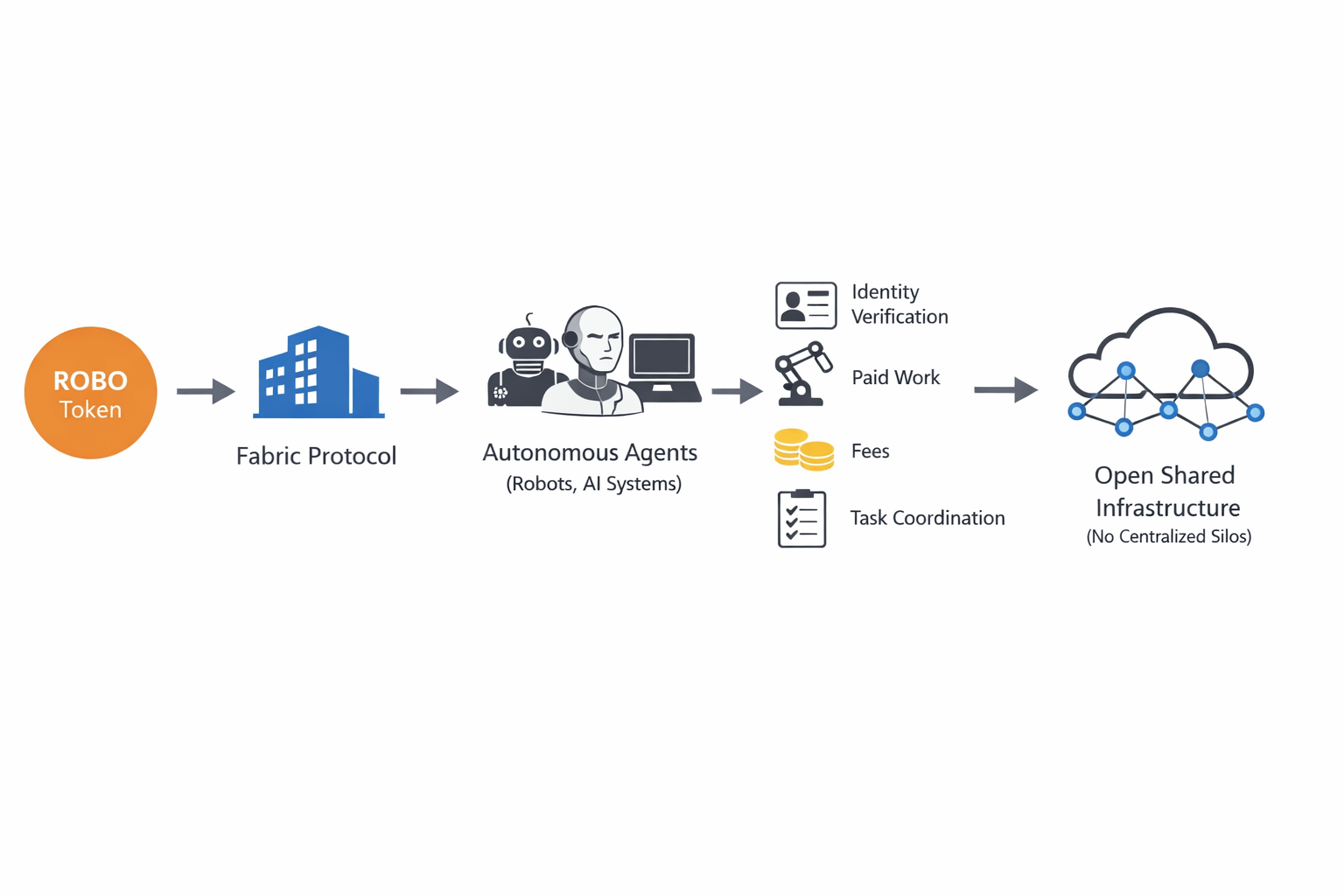
If you’re accustomed to the endless parade of Layer 1 and Layer 2 blockchains, here’s what makes ROBO different: it’s not primarily about scaling payments or DeFi yield farms. It’s about machine to machine economy giving physical and digital robots onchain identities, wallets, and the ability to transact in a standard, verifiable way. This solves a real pain point: today, robots often operate in closed loops controlled by one company’s software. Fabric aims to break those silos so any developer or operator can plug into shared robotic infrastructure.
So why is the ROBO token trending right now? The timing is important. On February 27, 2026, ROBO went live for spot trading on major exchanges including Coinbase, Binance Alpha, and Crypto.com a milestone that instantly upped its visibility and liquidity. That kind of opening day exposure is rare for a non-meme token focused on utility rather than hype.
From a trader’s perspective, listing events like this don’t just put a token on the map they ignite price discovery. Exchanges like Coinbase don’t list just anything. The process involves technical reviews, compliance checks, and a belief (however early stage) that a project has substance. On the day of listing, trading volume spiked, and early charts showed the kind of volatility we’ve come to expect a bit of bullish enthusiasm mixed with caution.
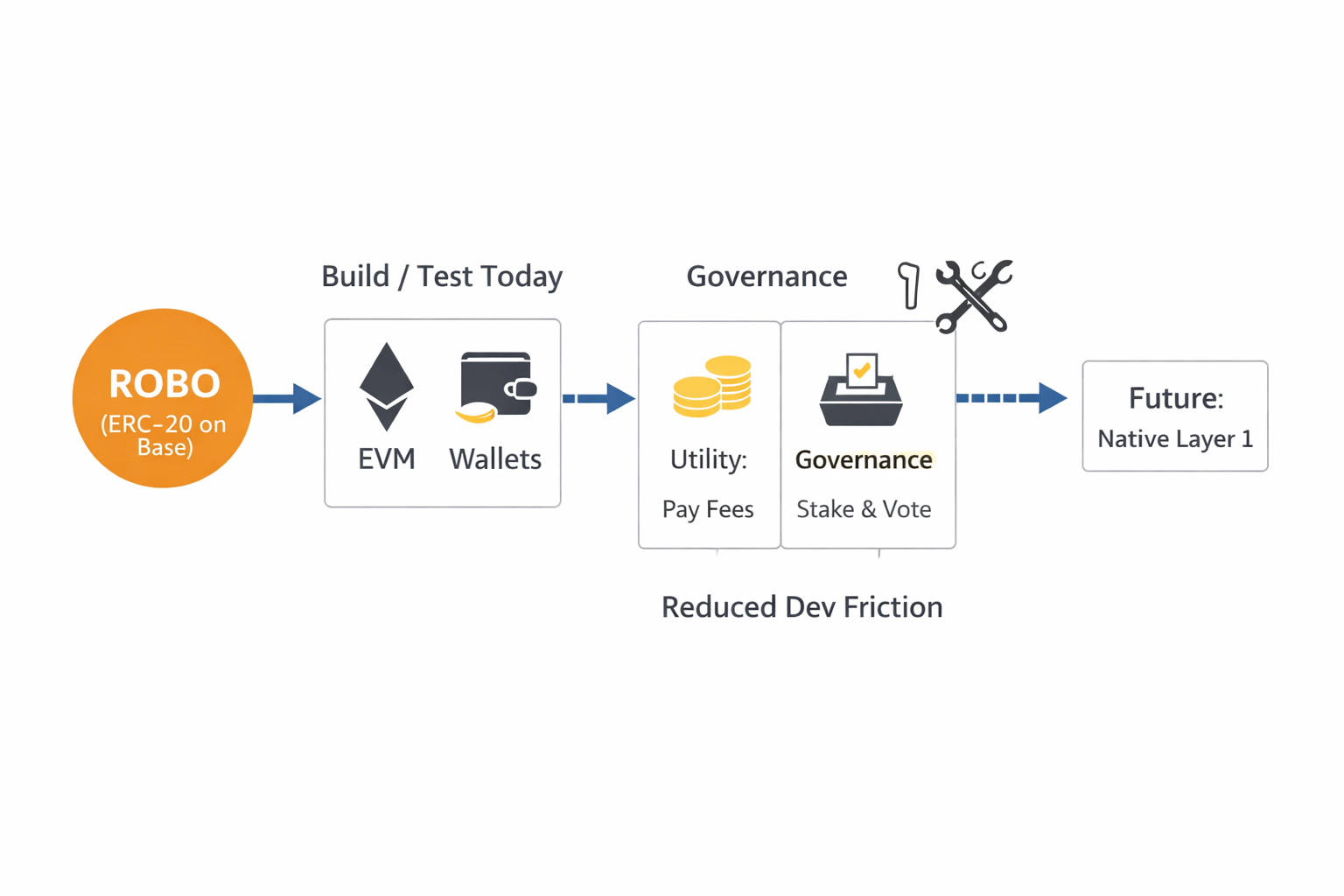
But let’s screw in the technical angle just a bit, because that’s where the real developer value comes in. ROBO is an ERC-20 token initially deployed on Base Coinbase’s Ethereum Layer 2 with plans to eventually migrate to a native Layer 1 once adoption justifies it. That means developers can already build, test, and integrate today without waiting years for fragile mainnet launches. In other words, speed and simplicity everywhere: deploy on a familiar EVM stack, use standard wallets and tools, and start experimenting immediately.
It’s also worth demystifying the jargon. When you hear terms like “utility token” and “governance token” tossed around, think of ROBO as the gas and the voting chips for this robot economy. You pay network fees in ROBO when robots interact say, settling an autonomous task or verifying identity and if you hold and stake ROBO, you get a say in how the network evolves. This reduces development friction because builders don’t need to invent bespoke systems for payment, coordination, or governance; the protocol provides them out of the box.
Another developer-centric idea here is alignment. Most blockchains give you payments and contracts. Fabric adds machine coordination primitives basically protocol-level tools for assigning work, verifying results, and rewarding contributors. That’s huge if you’re building apps where robots or AI systems are your end users, not just humans interacting with DeFi pools. Instead of inventing a new standard for every robotic fleet, developers can rely on Fabric and ROBO to handle the heavy lifting.
Of course, nothing in crypto is risknfree. Adoption of this vision where actual robots participate in economic activity via blockchain is still early. Real world deployment at scale hasn’t happened yet, and regulation around autonomous machines interacting economically is still unsettled. That’s why traders and devs alike should keep a close eye on traction metrics: real task volume, developer tools adoption, and integrations with physical hardware.
From a personal standpoint, I’m intrigued because this feels like a bridge between two worlds: tangible robotics and abstract cryptoeconomics. For years, blockchain has promised to “tokenize everything,” but most projects stayed digital. Fabric and ROBO are among the first serious attempts to tokenize work itself autonomous work done by machines. Whether that’s coordinating a fleet of delivery bots or letting a warehouse robot pay for its own maintenance, the implications are fascinating.
In the weeks and months ahead, keep an eye on liquidity, developer toolkits, and real adoption. That’s where you’ll see whether ROBO stays a speculative play or becomes a building block for decentralized robotics infrastructure. The trend isn’t just about price it’s about reducing development friction, empowering automation, and making robots participants in the crypto economy. That’s a conversation worth having in 2026 and beyond.