


For years, the DeFi community has treated MEV (Maximal Extractable Value) as an "invisible tax"—an unavoidable consequence of trading on-chain. We have seen bots front-run retail orders, sandwiching trades, and siphoning off millions in value simply because they have a millisecond advantage. As a researcher, I’ve often asked: why do we allow speed to determine fairness? In a continuous trading model, the fastest player always wins, leaving the retail investor to pay the price.
Fogo is changing this paradigm not just by being faster, but by changing how the market itself breathes. The weapon of choice? Discrete Frequent Batch Auctions (DFBA).
The Problem with Continuity
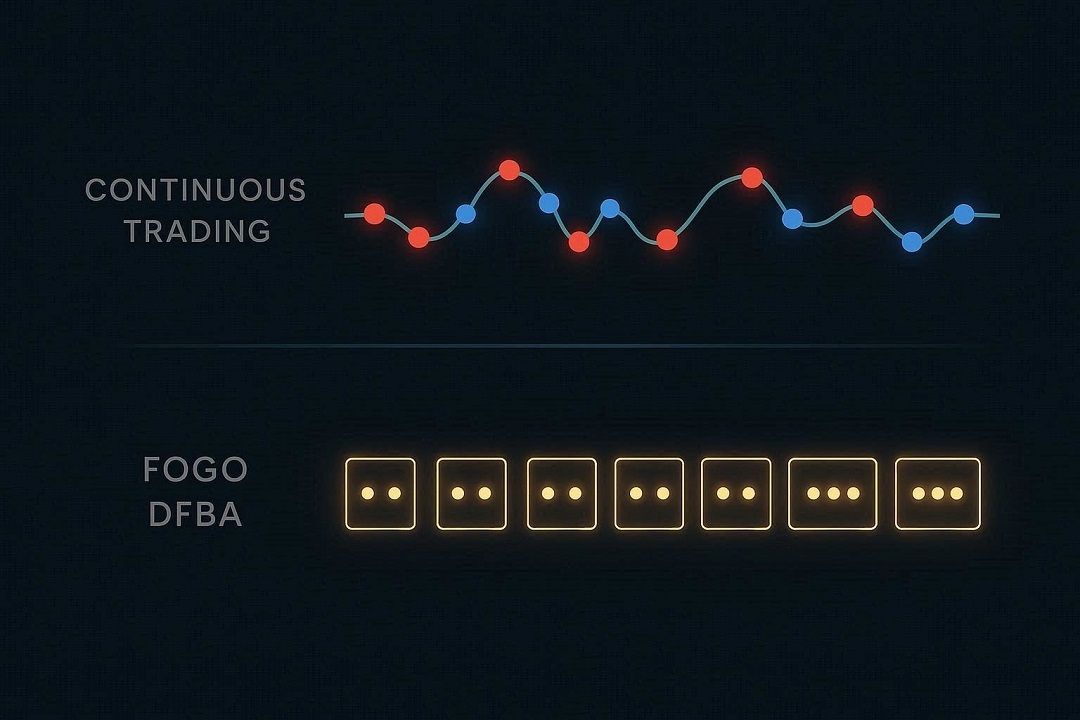
In a traditional Continuous Limit Order Book (CLOB) or an AMM, every transaction is processed the moment it arrives. This sounds efficient, but it creates a "latency race." Bots compete to be the first to react to an oracle update or a large buy order. This race doesn't improve the market; it only creates toxicity and value extraction.
Fogo’s implementation of DFBA on venues like Ambient shifts the focus. Instead of processing trades one by one in a continuous stream, it batches orders into discrete intervals. By doing this, Fogo removes the advantage of being "first" and replaces it with the advantage of being "fair."
How DFBA Levels the Playing Field
The magic of DFBA lies in its structure. Instead of a "first-come, first-served" chaos, the system collects all orders within a specific window. Then, it calculates a single clearing price for that batch.
This mechanism does three critical things:
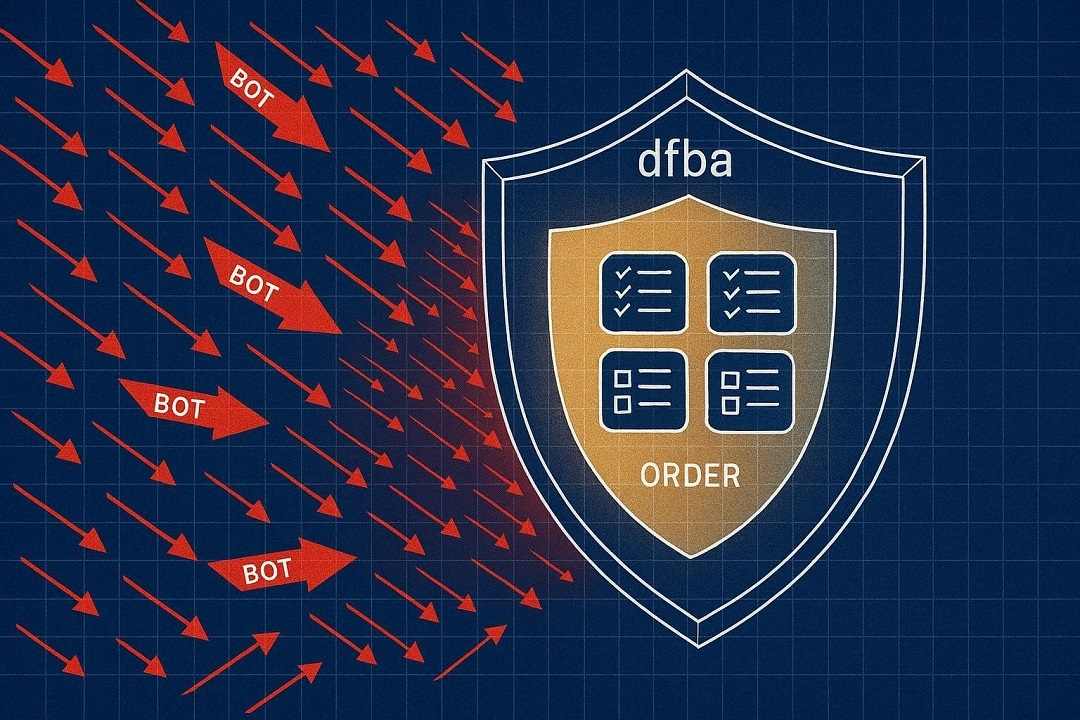
Eliminates Front-running: Since all orders in a batch get the same price, being 5 milliseconds faster than another trader provides zero benefit.
Oracle Anchoring: By anchoring batch prices to real-time oracles, Fogo ensures that the execution price remains consistent with the broader market, preventing "flash crashes" or artificial spikes.
Price Improvement: Instead of value being siphoned by MEV bots, external solvers and market makers compete to provide the best possible price to the batch. The competition shifts from speed to price.
The SVM Advantage: Engineering Fairness
Implementing a complex auction system like DFBA requires immense computational power. On slower chains, the latency of the smart contract itself would make batching impractical. However, because Fogo is built on a high-performance SVM (Solana Virtual Machine) with sub-100ms block times, these auctions can happen frequently enough to feel real-time to the user while maintaining the structural integrity of a batch auction.
This is what I call "Infrastructure Symmetry." The physical speed of Fogo allows for a market structure that is inherently more equitable. We aren't just making a faster casino; we are engineering a fairer financial system where the "Speed Tax" simply cannot exist.
Resilience Under Stress
Most trading systems break or become prohibitively expensive during high volatility. DFBA is designed to degrade gracefully. Even if oracles are stressed, the batching process prioritizes continuity and protection. It ensures that even in the eye of a market storm, your slippage settings are respected and your orders aren't sacrificed to a predatory bot.
Conclusion: A New Standard for On-Chain Markets
The future of DeFi isn't just about how many transactions we can fit into a second. It’s about who those transactions benefit. By attacking the root of latency through DFBA, Fogo is proving that we can build markets that are both lightning-fast and structurally fair.
For the retail trader, this means better fills, lower costs, and finally, a level playing field. The race for speed is over; the era of price competition has begun.