

Vanar didn’t start as a chain. It started as a business that had to ship.
That’s the part most people miss when they glance at Vanar and file it away as another EVM network with a new ticker. The people behind it spent years trying to sell digital collectibles to mainstream audiences—people who don’t care what a validator is, and definitely don’t care why a transaction failed. If your product breaks in that world, users don’t write long threads about decentralization. They just leave.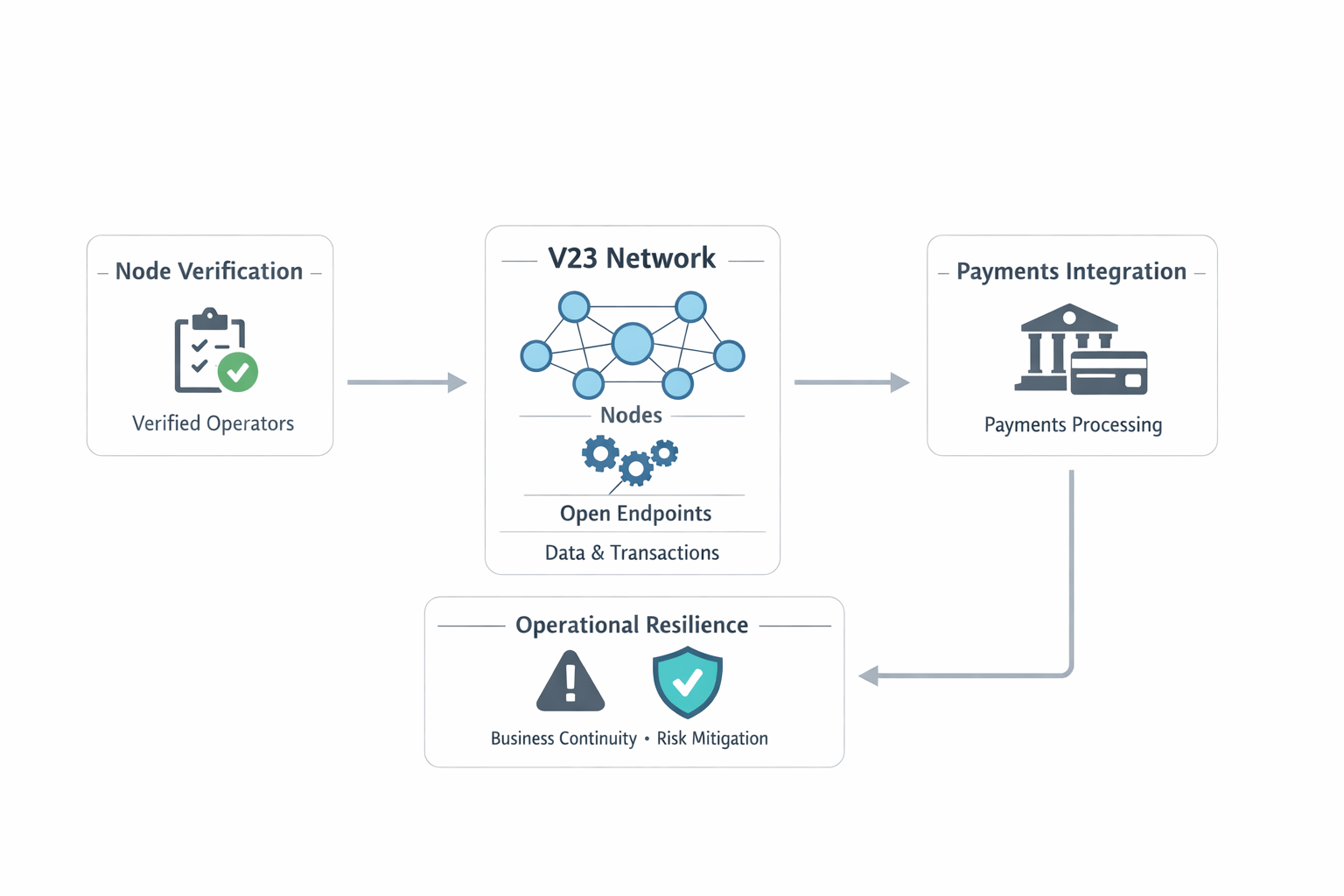
So when Vanar later began talking about building a blockchain “like a production system,” it wasn’t just a clever line. It read like something you say after you’ve watched a consumer product buckle under the mess of real traffic, customer support tickets, and partner expectations.
The story begins under a different name: Terra Virtua.
In 2021, Terra Virtua’s public face wasn’t “we’re launching a Layer 1.” It was “we’re building a collectibles platform tied to entertainment.” Interviews and profiles from that era show executives speaking the language of licensing and product rollout, not the language of crypto ideology. Jawad Ashraf was introduced as CTO and talked about NFTs as part of film and merchandising campaigns. Gary Bracey, the CEO, leaned on a resume that made sense to studios and gaming companies: decades in games production and a reputation built long before tokens became a funding model. That’s a different kind of credibility than the one most crypto projects chase, and it hints at a different set of priorities.
Then the brand changed. And the token did too.
In November 2023, the team announced that Virtua was transforming into Vanar, along with a token swap from TVK to VANRY on a 1:1 basis. They also made a very practical point: VANRY would initially exist as an ERC-20 token before a later migration to the new network. That’s not the sort of detail you emphasize if you’re purely chasing hype. It’s the kind of decision you make if you’re trying to avoid breaking the existing market plumbing—custody support, liquidity, integrations—while you build the harder thing behind the scenes.
The harder thing was the chain itself.
Here’s where Vanar makes its most revealing choice: it didn’t try to reinvent the execution stack. Vanar’s public GitHub repo describes the blockchain as EVM compatible and explicitly a fork of Geth (go-ethereum). In crypto culture, “fork” sometimes gets treated like an insult. In software culture, it can be the responsible move. You inherit a codebase that’s been battered by years of bugs, audits, and operator experience, and you change only what you must.
Vanar’s documentation backs that up with a blunt philosophy: pick “best fit,” not “best tech,” and choose EVM because developers already live there. The whitepaper makes similar arguments—tooling, familiarity, and lower migration friction. It’s less romantic than inventing a new VM, but it’s aligned with a team that seems to care more about deployability than originality.
But using familiar tech doesn’t magically solve the problems that make blockchains unpleasant for consumer apps. The biggest of those problems is fee unpredictability.
Vanar’s whitepaper proposes fixed fees denominated by dollar value, with a baseline claim around $0.0005 for common actions. The number sounds designed to make you raise an eyebrow—and you should. Still, what matters isn’t the exact fraction of a cent. It’s the intent: replace the usual fee roulette with something a product team can plan around. If you’ve ever watched a consumer app team panic because costs spiked overnight, you understand why someone would want fixed pricing even if it’s hard to sustain.
The whitepaper also acknowledges the obvious downside: if it’s always cheap, it’s cheap to abuse. Their answer is tiering—bigger gas usage falls into higher price bands—along with examples meant to show how block-filling attacks become expensive under those tiers. Again, the mindset feels less like “let the market handle it and more like “this is a service; we need guardrails.
Then there’s consensus, and this is where Vanar’s approach becomes impossible to misunderstand.
Vanar’s docs describe a hybrid approach: Proof of Authority (PoA), complemented by Proof of Reputation (PoR). Early on, the Vanar Foundation runs validator nodes, with external validators intended to be onboarded later through a reputation assessment process. That’s not decentralization in the strict sense. It’s a curated operator model, at least at the start.
If you’re building for institutions or brand partners, that model can look appealing: known operators, accountability, easier coordination, potentially smoother performance. If you’re building for adversarial environments where censorship resistance is the whole point, it’s a red flag. The important thing is that Vanar appears to be choosing the trade-off deliberately.
Performance targets reinforce the same theme. Vanar’s documentation says the chain was customized to produce a block every three seconds, and the whitepaper’s examples assume that cadence. Three seconds is not a scientific breakthrough. It’s a product decision: fast enough to feel responsive, stable enough to operate without pushing into extreme network assumptions.
The less glamorous infrastructure details are there too: chain ID, RPC endpoints, explorer references. Third-party chain registries list Vanar mainnet with chain ID 2040, and Vanar’s own docs tell developers how to add the network to wallets. None of that makes a chain special, but it does make it usable, and usability is the quiet obsession of teams that want real deployments instead of theoretical praise.
Then Vanar’s newer narrative layer arrives: AI.
Vanar’s website describes a multi-layer architecture with semantic storage, reasoning components, and agent-like systems, including claims around vector storage and distributed compute for “sub-second” model execution. That’s ambitious—and it’s exactly where a cautious reader should slow down. In crypto, “AI” has become a magnet word, and a lot of projects blur the line between what happens in consensus and what happens off-chain as a service. The public technical artifacts that are easiest to verify today (docs, repo, whitepaper) are much more concrete about the chain mechanics than about the AI stack as a fully specified, consensus-critical system.
That doesn’t mean the AI layer is fake. It means the burden of proof is higher than a nice diagram. Developers will eventually demand hard answers: what runs on-chain, what runs off-chain, how determinism is handled, what’s verifiable, what’s marketing shorthand. Until those questions have crisp technical responses and real-world benchmarks, the AI narrative remains a direction of travel, not a finished product.
Token distribution is another area where the boring documents tell you more than promotional threads ever will.
A UK-oriented disclosure document describes VANRY’s supply at 2.4 billion and lays out allocations for the genesis swap, validator rewards, development rewards, and community incentives. CoinMarketCap’s snapshot reflects the same max supply and provides circulating supply and market data context. You don’t need to love the asset to appreciate the utility of clear accounting: it tells you what the project expects to spend tokens on—security, operations, development—rather than pretending everything will work itself out organically.
When you step back, Vanar’s story starts to look less like a standard crypto launch and more like a gradual hardening of a team’s priorities.
It comes from a consumer product background. It rebrands and swaps a token without trying to sever continuity. It builds on Geth and the EVM because familiarity lowers friction. It tries to make fees predictable because consumer UX hates variance. It starts with a curated validator model because it values operator control and accountability—then promises a path toward broader participation through reputation.
That combination can work. It can also fail in very specific ways.
The biggest risk isn’t technical. It’s governance and credibility. A foundation-run PoA phase is inherently centralized, and the industry has seen too many projects treat “we’ll decentralize later” as a forever-plan. If Vanar wants to be taken seriously as infrastructure, it will eventually have to prove that external validation isn’t symbolic, that rules don’t change quietly when convenient, and that fee policy holds up under genuine congestion rather than curated conditions.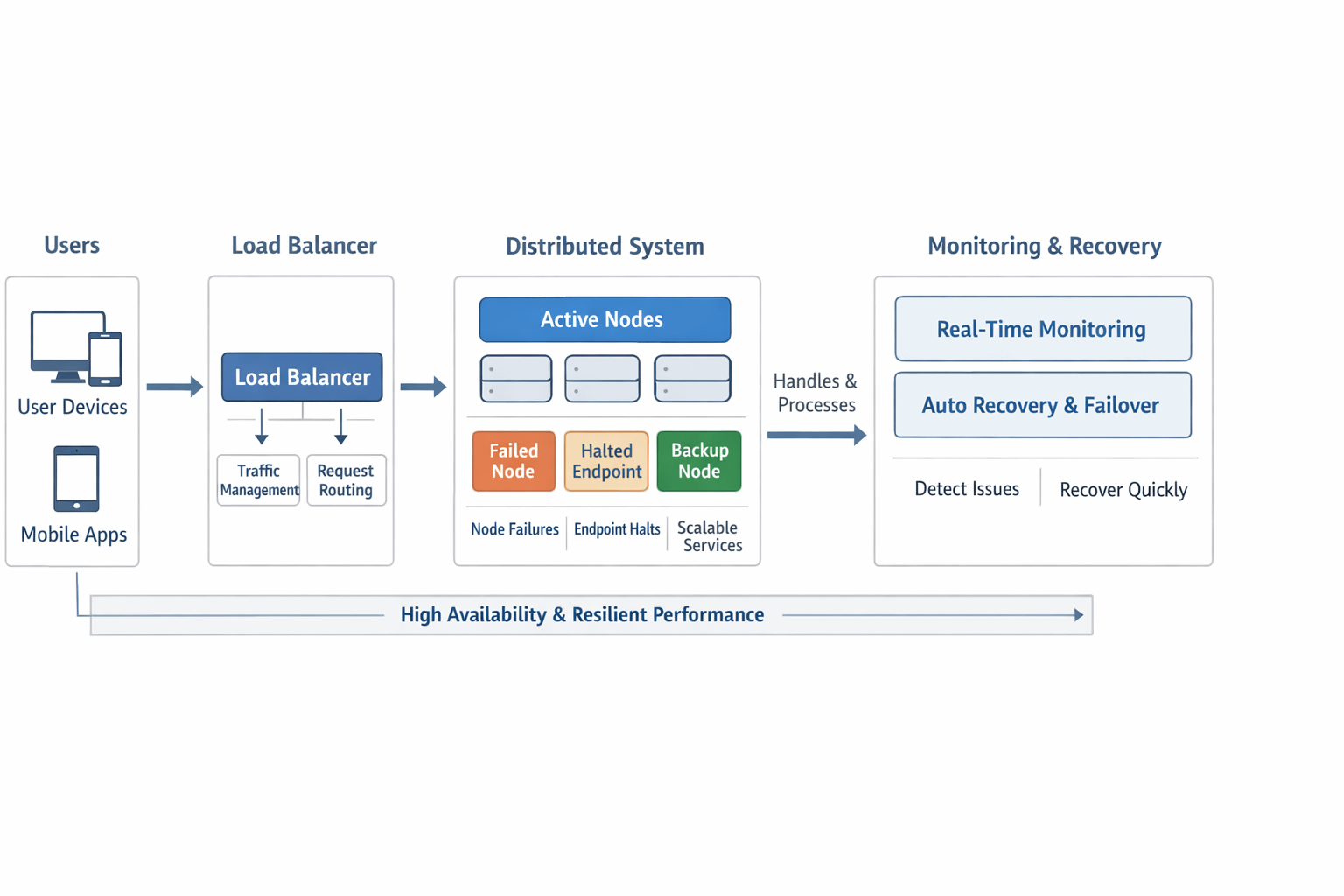
So the most honest way to summarize Vanar’s “power move” is also the least flattering and the most useful: it’s trying to run a blockchain the way infrastructure gets run in businesses that can’t afford excuses.
If that sounds less glamorous than the usual crypto narrative, that’s the point. The market is full of chains that are great at describing futures. The test for Vanar is simpler and harsher: can it behave well in the present—under pressure, under scrutiny, and without needing people to take its word for it.
