
TRON has quietly become one of the most important networks in the digital asset economy.
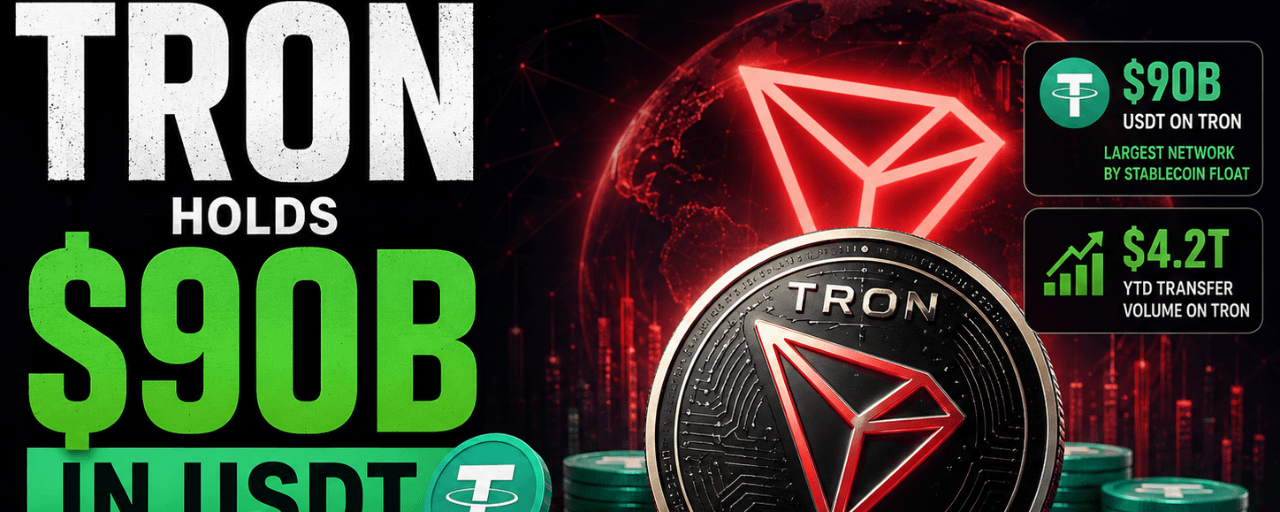
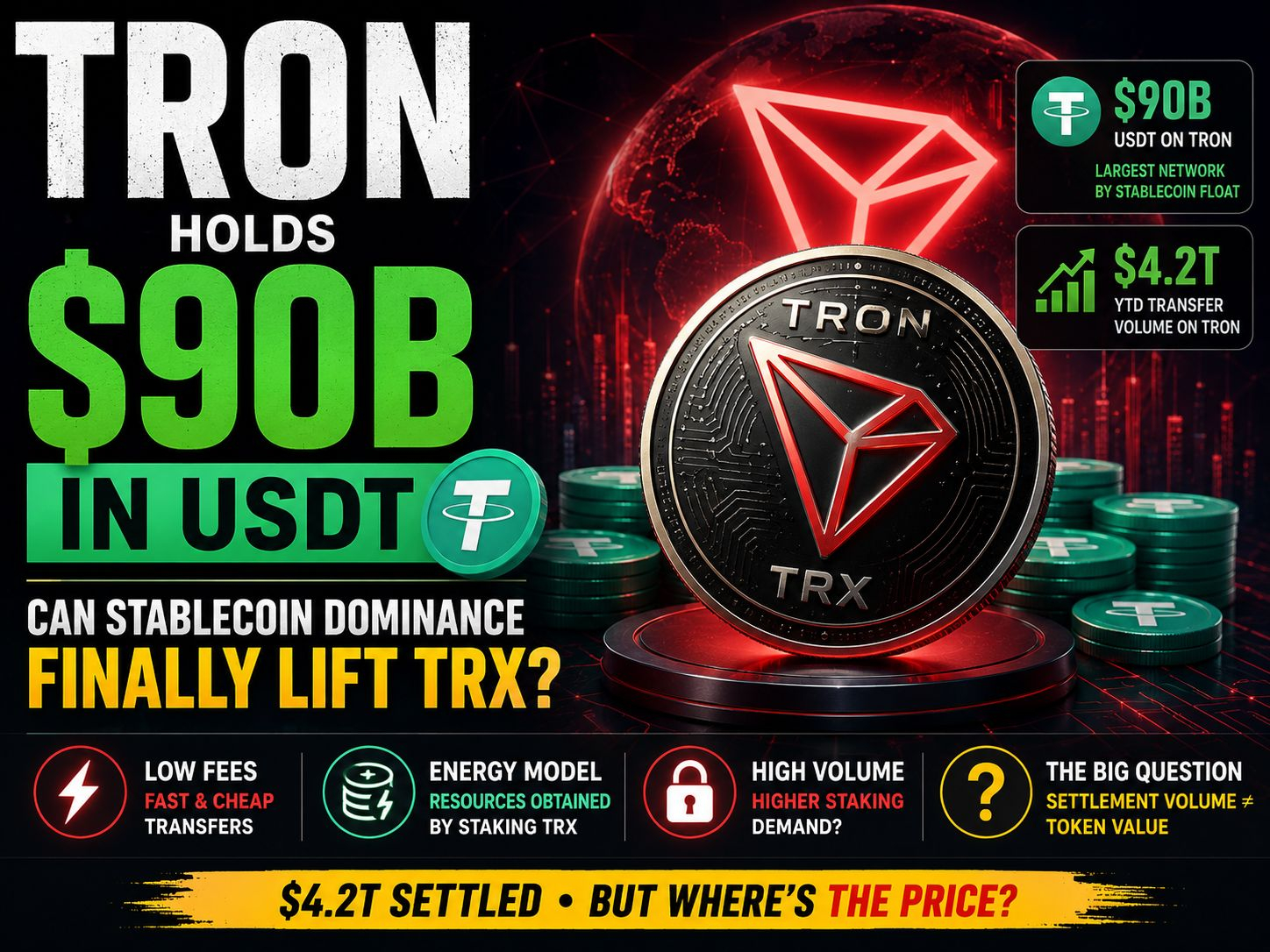
The blockchain now hosts approximately $90 billion in USDT, making it the largest stablecoin network by circulating supply. So far this year, transaction volume on the network has surpassed $4.2 trillion, reinforcing TRON's position as one of the world's leading blockchain settlement layers.
Despite this explosive growth, one question continues to divide investors:
Why hasn't TRX fully reflected the network's expanding utility?
Settlement Power Doesn't Always Equal Token Value Unlike many blockchain networks, TRON processes an enormous share of global stablecoin transfers thanks to its low transaction costs and fast settlement speeds.
Millions of users rely on the network daily for payments, remittances, exchange transfers, and on-chain activity.
However, growing transaction volume alone doesn't automatically translate into higher token prices.
Where TRX Fits Into the Equation TRON's economic model requires users and applications to consume bandwidth and energy—resources that can be obtained by staking TRX.
In theory, as stablecoin activity increases, demand for these network resources should also rise, potentially increasing the amount of TRX locked through staking.
The long-term question is whether this growing utility can create sustained demand for the token itself.
The Real Test Network usage is easy to measure.
Token value is much harder to predict.
For TRX to experience a meaningful revaluation, investors will likely watch several factors:
• Growth in long-term staking participation.
• Higher on-chain activity beyond simple transfers.
• Increased institutional use of TRON's settlement infrastructure.
• Sustainable demand rather than temporary spikes in transaction volume.
Without these factors, record-breaking settlement volumes may continue to coexist with relatively modest token performance.
Final Thoughts TRON has already proven it can move enormous amounts of value across its network.
The next challenge isn't increasing transaction volume.
It's proving that network adoption can create lasting economic value for TRX itself.
As stablecoins continue expanding globally, investors may increasingly ask whether settlement dominance eventually translates into token appreciation—or whether those two metrics can remain disconnected.
👇 Do you believe massive network activity will eventually drive TRX higher, or can a blockchain dominate stablecoin transfers without its native token keeping pace?