

Most people hear headlines like this and immediately think it's just another political argument.
It rarely is.
When a world leader publicly says, "I don't want to deal with them anymore," negotiations don't just become harder—they become less predictable.
That uncertainty is what markets fear most.
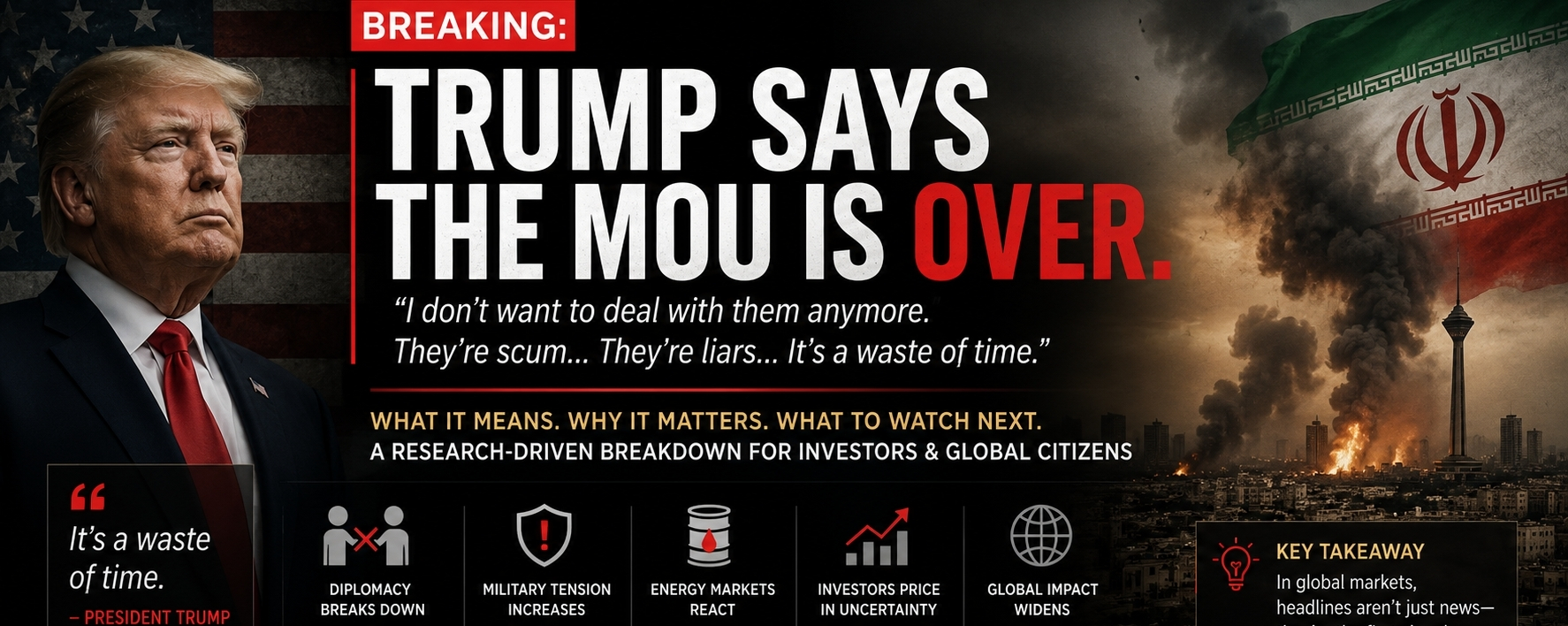
According to multiple reports, President Trump has declared the memorandum of understanding (MoU) with Iran effectively over, calling further negotiations "a waste of time" and accusing Iranian leaders of being "liars." The comments came after the collapse of indirect talks and renewed military escalation in the region.
But here's the part many people overlook.
A memorandum of understanding isn't always a final peace agreement. It's often a framework that keeps communication alive while both sides work toward something bigger.
When that framework breaks down, several risks appear at the same time:
• Diplomatic channels become weaker. • Military tensions become more likely. • Energy markets react almost immediately. • Investors begin pricing in uncertainty instead of stability.
That's why geopolitical headlines often move oil before they move politics.
We've seen this pattern repeatedly. Whenever tensions rise around the Middle East—especially near key shipping routes like the Strait of Hormuz—the market starts asking one question:
Could global energy supplies be disrupted?
Even before any long-term outcome is known, uncertainty alone can push oil prices higher and increase volatility across global financial markets.
This is an important reminder for investors.
Markets don't wait for conflicts to be resolved.
They react to expectations.
One political statement can change risk perception within minutes, affecting commodities, stocks, currencies, and even crypto sentiment.
Whether diplomacy resumes or tensions continue remains uncertain.
But one lesson is already clear:
In global markets, headlines aren't just news—they're often the first signal that investors must reassess risk before the numbers fully reflect it.