

Key Takeaways:
Crypto derivatives volume hits a record $85.7T in 2025, averaging $264.5B daily
Binance leads the market with $25.09 trillion, capturing 29.3% of global trading
Report shows geopolitical and policy uncertainties were critical market influencers in 2025
Record-breaking Trading Volume in 2025
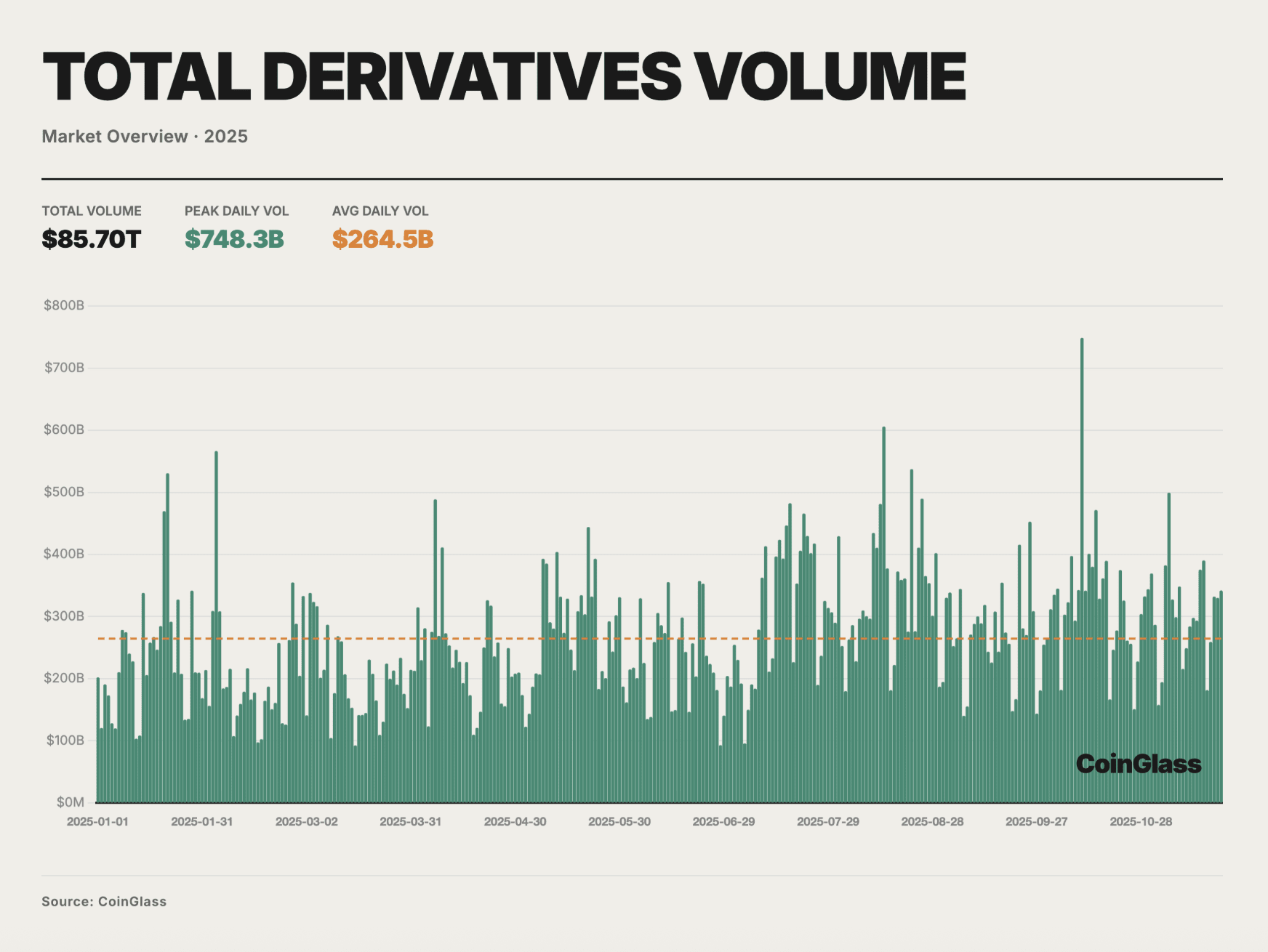
The crypto derivatives market experienced an explosive rise in 2025, reaching $85.7 trillion in total volume. The daily average trading volume surged to $264.5 billion, marking a pivotal moment in the evolution of cryptocurrency as a mainstream financial asset class. The market structure has shifted from a retail-driven, high-leverage model to one characterized by institutional hedging and more diversified investment strategies. This transition was partly driven by the increasing popularity of spot exchange-traded funds (ETFs), options, and compliant futures, which saw massive institutional participation.
The volume surge in 2025 highlights the growing integration of crypto into traditional financial markets. For instance, the Chicago Mercantile Exchange (CME) saw its Bitcoin futures open interest surpass Binance for the first time in 2024, continuing its dominance into 2025. This reflects an industry-wide shift towards compliant infrastructure and decentralized technology, alongside more regulated pathways for institutional players.
Binance Leads in CEX Volume
The Coinglass report showed that Binance recorded $25.09 trillion in cumulative derivatives volume, which comes to 29.3% of the global market. This means that for every $100 traded, nearly $30 was transacted through Binance.
The report also showed that based on daily average Open Interest data from major CEXs in 2025, the top ten centralized exchanges accounted for an aggregate daily average OI of approximately $108.3 billion. Binance secured a lead with a daily average OI of approximately $30 billion, capturing a market share of about 28%.
Shift Toward Institutional Hedging and New Complexities
The derivatives market in 2025 is not just bigger; it’s more complex. Traditional speculative trading is being replaced by more sophisticated institutional trading demands, including hedging, basis trading, and the use of ETFs for risk management.
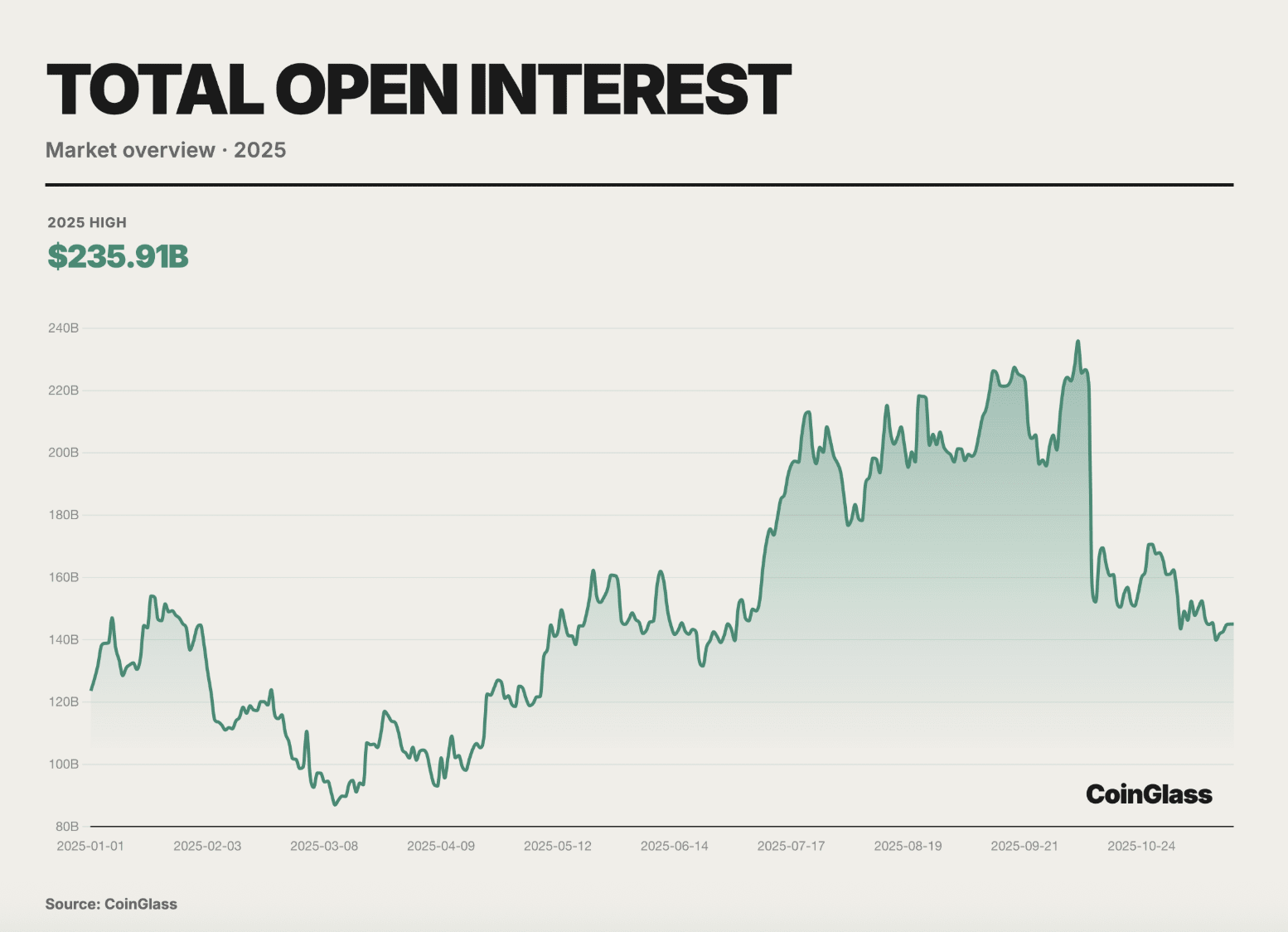
This complexity has introduced new challenges, including increased systemic tail risks and potential vulnerabilities in liquidation rules and cross-platform risk transmission. The year saw multiple stress tests of these mechanisms, especially during extreme market events like the Q4 deleveraging that erased $70 billion in positions. Despite this, the market rebounded, ending the year with $145.1 billion in open interest, still a 17% increase from the start of the year.
Growing Role of Stablecoins and Tokenized Assets
A major shift in 2025 was the growth of stablecoins and tokenized assets. The total market capitalization of stablecoins exceeded $230 billion, while their on-chain settlement volume hit $1.5 trillion. This growth was driven by both institutional adoption and an evolving regulatory landscape, particularly in the United States, where new legislation like the GENIUS Act is helping legitimize digital assets and integrate them into traditional financial systems.
Simultaneously, tokenization of Real World Assets (RWAs) bridged the gap between the crypto world and traditional finance. For instance, stock tokens saw a 2,695% growth in market cap, creating new opportunities for investors to access traditional assets on the blockchain. These innovations in tokenized assets are not just changing the way financial assets are traded but also setting the stage for future market expansions. On-chain access to real-world assets is expected to grow rapidly, potentially reaching $18.9 trillion by 2033.
Outlook: The Future of Crypto Derivatives
Looking ahead, the crypto derivatives market in 2026 will likely continue to be influenced by institutional interest and regulatory clarity. As stablecoins, tokenized assets, and DeFi derivatives gain traction, expect further evolution in the market structure. The regulatory landscape will play a crucial role in shaping the pace of these developments, especially as global financial institutions adapt to crypto-native infrastructures and explore new avenues for cross-border payments and asset tokenization.

