
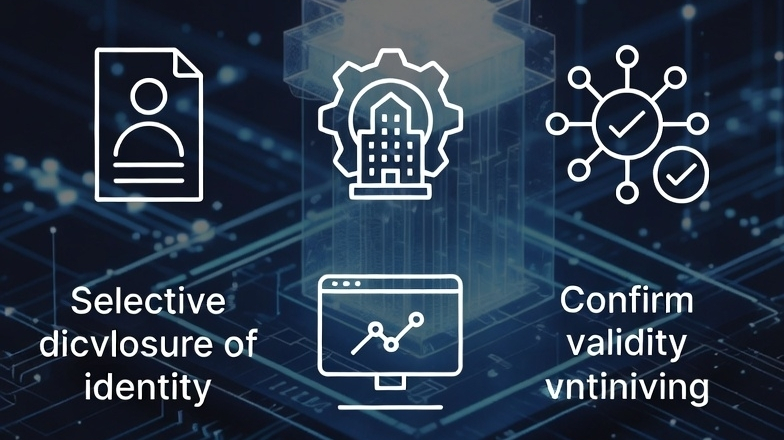
The thing that really clicks for me is this: privacy doesn’t have to mean going completely dark and invisible. A lot of earlier attempts went so far into full concealment that they ended up feeling disconnected from how people and businesses actually operate. Most of us aren’t trying to disappear. We just don’t want to hand over ten layers of personal or financial history every time we need to prove one small fact.
That’s the shift that keeps pulling me back. It’s not really about whether data can stay hidden plenty of projects have chased that already. The sharper question is whether we can verify something is true without ever dragging the raw details into the open. That feels like the harder, more honest problem to solve.
And hard is good. Easy stories usually don’t survive long around here.
I don’t get drawn in because it uses the usual privacy buzzwords. What stands out is that it’s quietly pointing at a real crack in how blockchains were originally built. We treated total transparency like it was automatically good like openness itself was the moral high ground. But in practice it often turned clumsy, invasive, and borderline unusable. This approach pushes back against that dogma without making secrecy the whole personality.
That matters more than it might look at first.
Someone should be able to prove they meet the requirements for something without unloading their entire life story onto a public record. A company should be able to run important logic without exposing every internal detail to anyone who glances over. A network should be able to confirm validity without archiving every single interaction forever. None of that sounds extreme. It just feels like something we should have built from the start.
But spotting the problem is only step one. The crypto space is full of sharp ideas that sounded perfect on paper and then quietly faded when they hit real users, real money, and real pressure. A strong thesis alone doesn’t win. I’m still watching for the moment this kind of selective, controlled proof stops being a “nice research topic” and starts feeling like basic plumbing that every serious builder expects to have.
If that tipping point arrives, then it has real legs. If not, it risks ending up as another thoughtful project the market politely nods at and moves past.
The timing feels better now than it would have a few years back. Back then the market still had enough hype momentum to ignore obvious design flaws. Today the fatigue is visible. People have lived through what constant exposure actually brings surveillance creep, data leaks, systems that technically function but feel cold and hostile to anyone inside them. The old love affair with radical openness has cooled off. That’s healthy. It had to.
So there’s a real, if narrow, opening right now.
What makes this feel different isn’t loud marketing or fast hype. It’s the sense that the purpose came first the problem was identified before anyone tried to sell a story around it. Most projects do it the other way: narrative first, meaning later. This one seems built in reverse.
Still, I stay careful. I’ve seen too many clean ideas get warped the moment incentives kick in token pressure turning everything into short-term spectacle. The only question that actually counts is whether this kind of precise, restrained verification can become so smooth and useful that people stop treating it like an optional extra and start treating it like infrastructure we can’t imagine building without.
If it crosses that line, we won’t be talking about privacy anymore. We’ll just be talking about how the whole system finally grew up a little.