Bitcoin mining is going through a big change. Costs are rising and profit is getting harder to keep. At the same time the fast growth of AI technology is starting to compete for the same power and computer hardware that miners use. This shift is slowly changing how the mining business works.
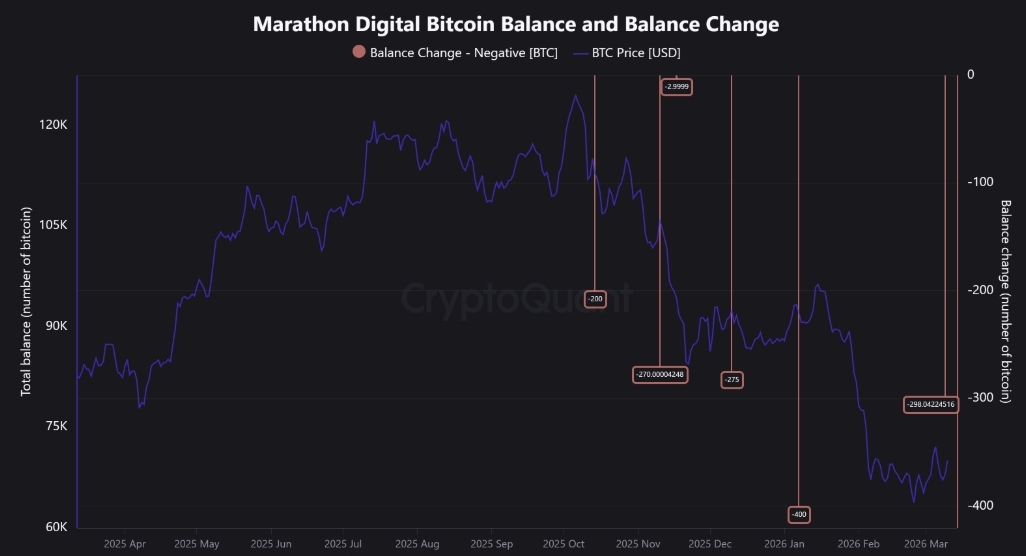
Mining companies depend on strong Bitcoin prices and low costs to stay profitable. Recently one large mining firm moved two hundred ninety eight Bitcoin from its reserves after updating its policy to allow selling from company holdings. This step showed that even big miners are feeling pressure as operating costs rise.
Bitcoin was trading around sixty eight thousand to seventy thousand dollars during this period. At the same time the average cost to mine one Bitcoin for this company was around seventy thousand dollars. This means the company was spending about the same or even more money to produce each coin than the coin was worth in the market.
When this situation happens miners often sell some of their stored Bitcoin to cover expenses. These sales help pay for electricity machines and daily operations. In past market cycles strong miner selling has sometimes appeared near the later stage of a market correction. It can also signal that the market may be close to a turning point.
Another important change is coming from the rise of AI data centers. Many mining companies are now looking at new ways to use their equipment and energy access. Some firms have started shifting part of their business toward hosting computer systems used for AI and high power computing tasks.
These services can bring steadier income than mining alone. Bitcoin mining income depends on market price and network competition. AI computing on the other hand often runs on long term contracts which can provide more stable cash flow.
At the same time mining itself is becoming more difficult. The amount of computing power in the Bitcoin network keeps rising as more machines join the system. As competition grows each machine earns a smaller share of rewards. This means miners must spend more money to stay competitive.
Revenue earned from each unit of mining power has also been dropping. When income per machine falls while energy and hardware costs stay high the pressure on miners grows even stronger.
Another factor is the huge investment now flowing into AI infrastructure. Technology companies are expected to spend more than five hundred billion dollars on large scale computing systems by the year two thousand twenty six. These systems require huge amounts of electricity and advanced chips.
Because of this demand mining companies now compete with major tech firms for energy supply and computer hardware. This competition can push costs even higher for mining operations.
Stock market investors are already reacting to these changes. Shares of some mining companies have risen strongly during the past year as investors look at their new plans around AI data centers and computing services. Many investors now see these companies not only as Bitcoin miners but also as future infrastructure providers for the growing AI industry.
Large investment firms also continue to hold positions in several mining companies. This shows that investors believe the industry will adjust rather than disappear.
In simple terms the mining sector is entering a new phase. Rising costs and stronger competition are forcing companies to rethink their business models. Some miners will continue focusing on Bitcoin while others will combine mining with AI computing services.
The future of the industry will likely depend on how well these companies adapt to the changing technology landscape while managing the cost of energy and equipment.