
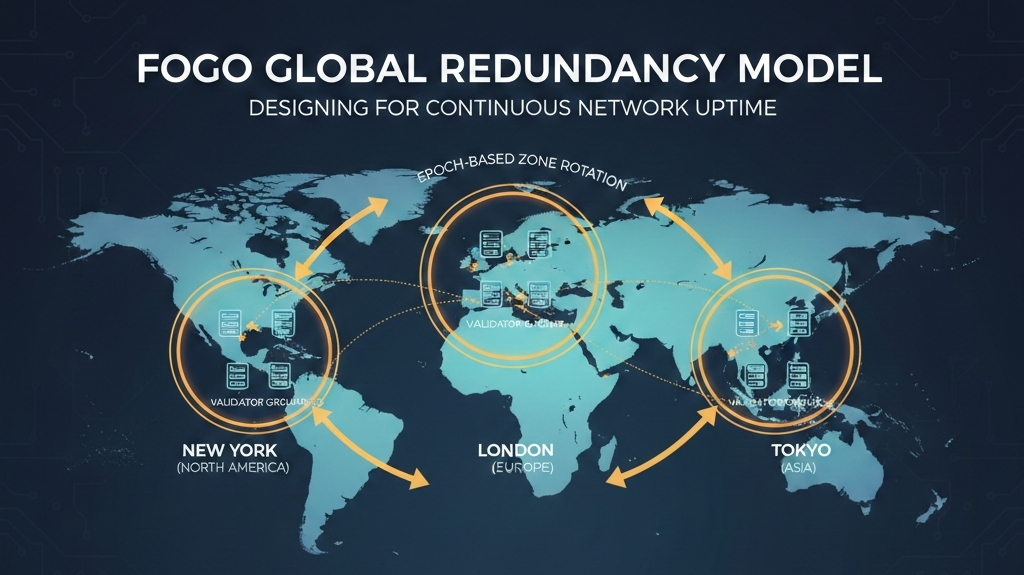
Most blockchains chase seamless global synchronization, often at the cost of vulnerability to regional disruptions. Fogo Chain, however, feels like it's designed to embrace the world's geography a network that rotates its heart across continents, quietly ensuring continuous uptime without ever demanding attention. Its Global Redundancy Model isn't about flashy resilience; it's a philosophical commitment to invisibility, where reliability becomes the radical ambition, allowing real people to build habits around a blockchain that never falters, much like the steady hum of essential infrastructure.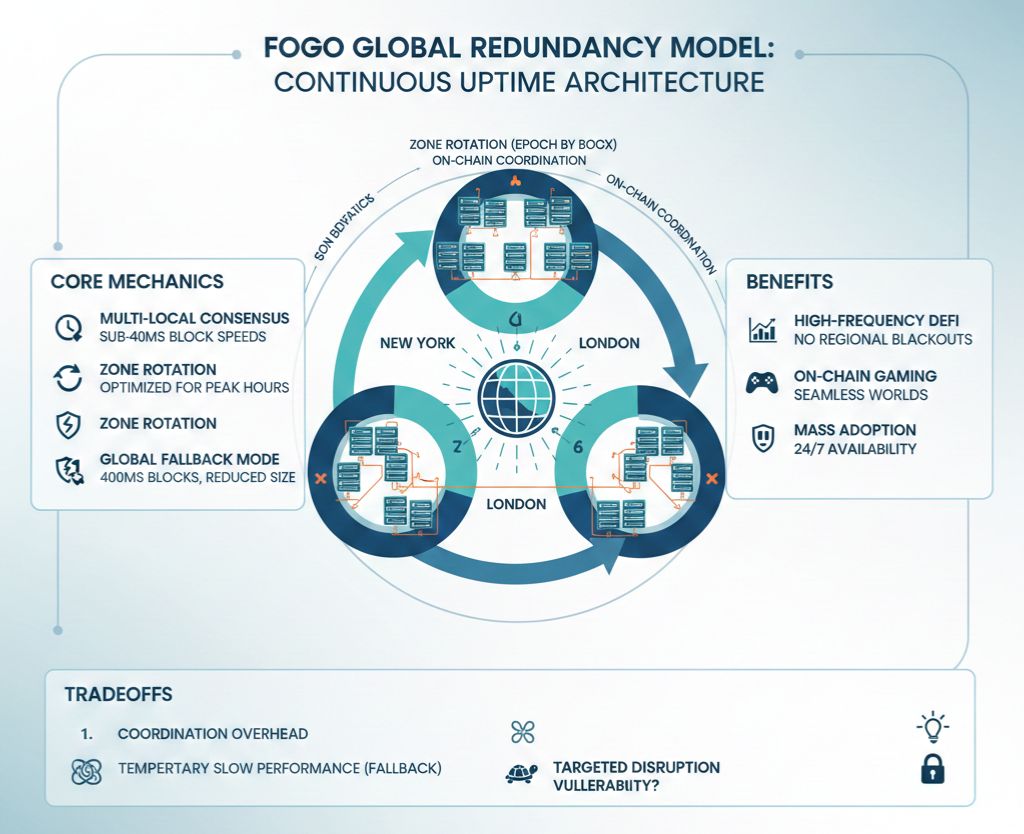
When I first started looking closely at @Fogo Official Global Redundancy Model, what stood out wasn’t the common buzzwords like "decentralized" or "scalable." It was the human pragmatism: a system acknowledging that the internet isn't perfectly uniform, that outages in one region shouldn't cripple everyone. The idea that really clicked for me was its "follow the sun" inspiration from global finance validators clustered in zones like New York, London, or Tokyo, rotating leadership to keep latency low while building in failover safeguards. This isn't innovation for spectacle; it's boring but brilliant engineering for the pain points of everyday users, like traders losing opportunities during network hiccups or gamers facing immersion breaking lags from distant downtimes.
Diving deeper, three core mechanics define this model. First, multi local consensus groups validators in geographically close zones, slashing propagation times for sub 40ms block speeds in active areas. Second, zone rotation happens epoch by epoch via on chain coordination, optimizing for peak trading hours and preventing any single spot from becoming a weak link. Third, a global fallback mode kicks in during failures switching to 400ms blocks with reduced size ensuring the network chugs on, even if imperfectly. Stepping back, these features address real frustrations: no more re explaining failed transactions to support, or hesitating on a DeFi move because of unpredictable uptime.
Tying this to the ecosystem, Fogo's redundancy empowers products where continuity is everything. In high frequency DeFi apps, traders execute strategies without regional blackouts derailing flows; on chain games maintain seamless worlds, free from outage induced pauses that shatter engagement. The model's utility shines in fostering mass adoption developers can build wallets or bridges confident in 24/7 availability, drawing in non crypto natives who expect tech to just work, like flipping a switch.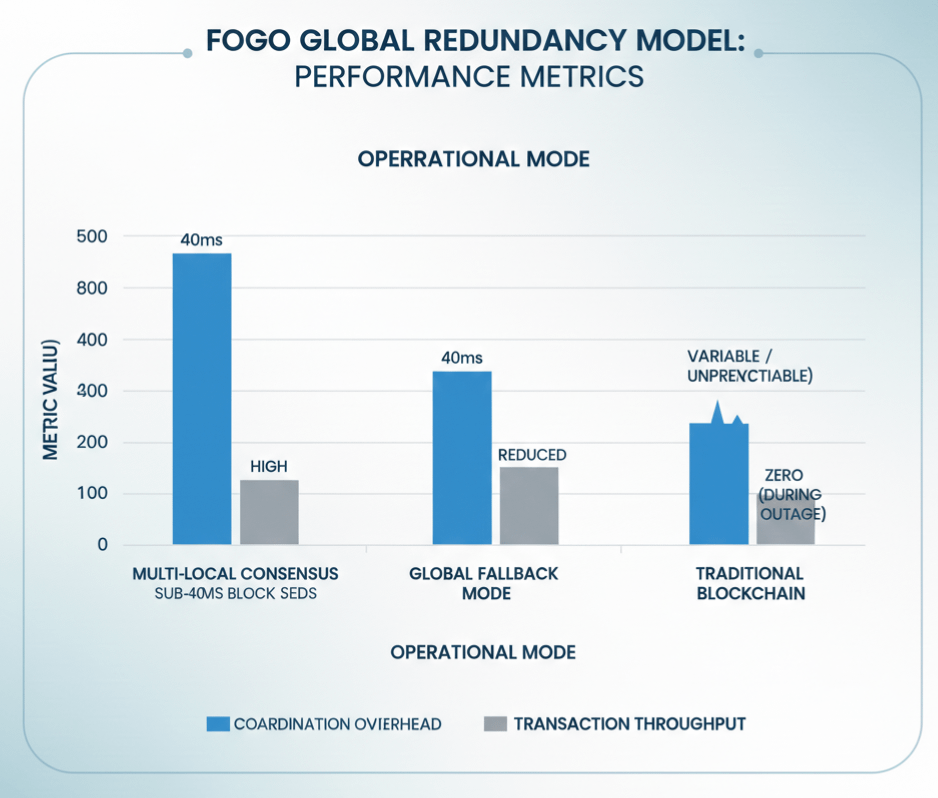 Yet, honest balance is due. Tradeoffs loom: rotation adds coordination overhead, potentially introducing brief hitches during handoffs. The fallback mode, while lifesaving, means temporary slower performance, which could frustrate latency sensitive users. Skeptically, I've wondered if over reliance on physical zones might expose the network to targeted disruptions, like concentrated attacks on key data centers. It's not a panacea, but a thoughtful compromise in a flawed world.
If Fogo succeeds, most users won’t marvel at its zone rotations or fallback protocols. They’ll simply live with it, the blockchain fading into habit like the power grid always on, unnoticed until it's indispensable. That might be the most human strategy in crypto: designing not for applause, but for endurance.