
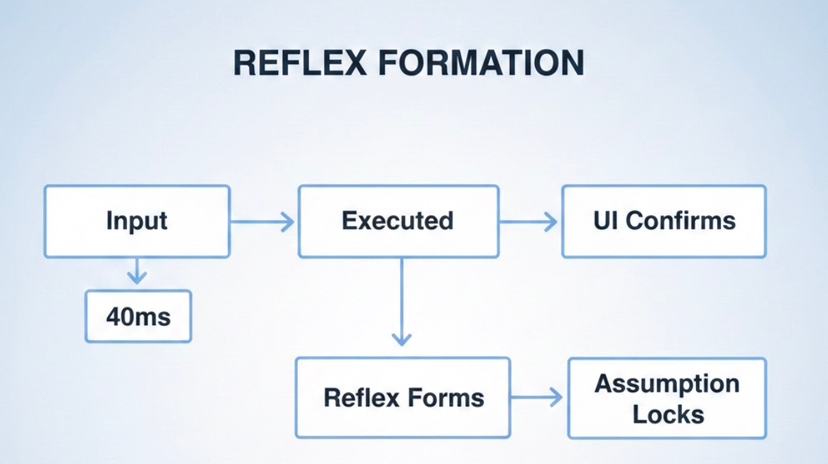

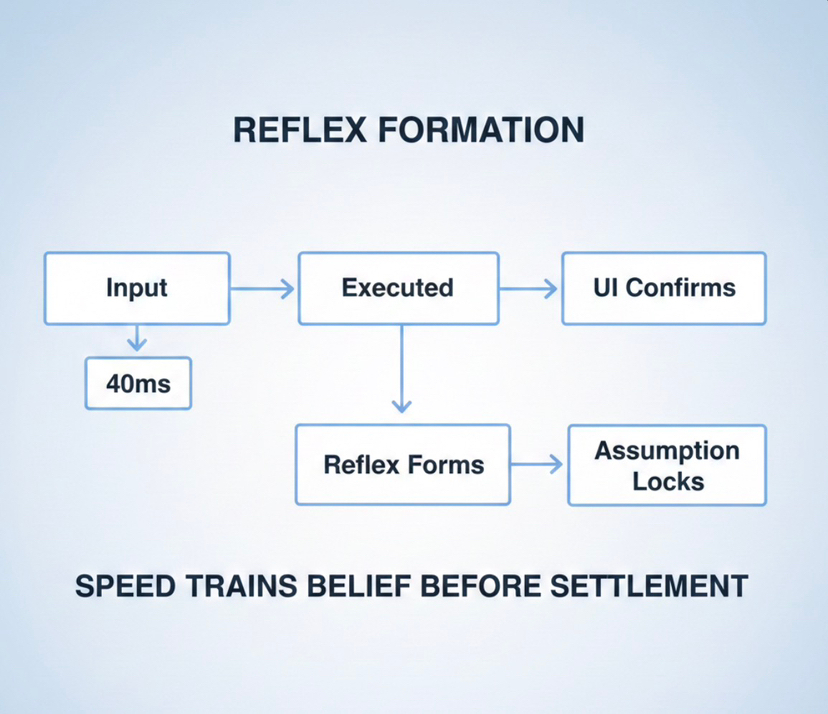
The problem I ran into on Fogo wasn’t misunderstanding throughput.
It was trusting my first reaction.
When execution fires that fast, your body responds before your model does. The SVM snaps, the state updates, and you feel closure. Not logically — physically. The interface rewards that feeling. You stop asking whether the trade is done and start acting like it is.
That’s where timing assumptions sneak in.
Finality doesn’t rush just because execution does. There’s a narrow slice of time after the fill where the trade exists but isn’t yet immovable. No rollback risk. No warning. Just exposure waiting for the rest of the system to agree it’s real.
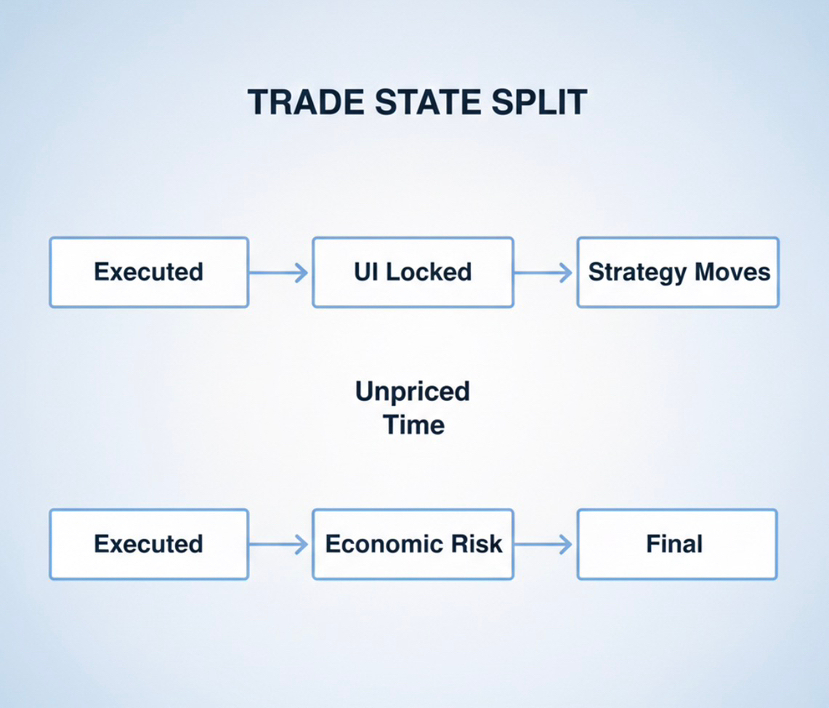
Most strategies break in that gap.
Cancels assume certainty. Hedges assume delay. Risk engines hesitate because they’re designed to wait for anchors, not flashes. Same transaction, different clocks measuring “now.”
I’ve seen trades soften there. Not enough to trigger alarms. Just enough to matter. By the time finality resolves, the edge is thinner, the math slightly worse. Nothing failed. The assumption did.
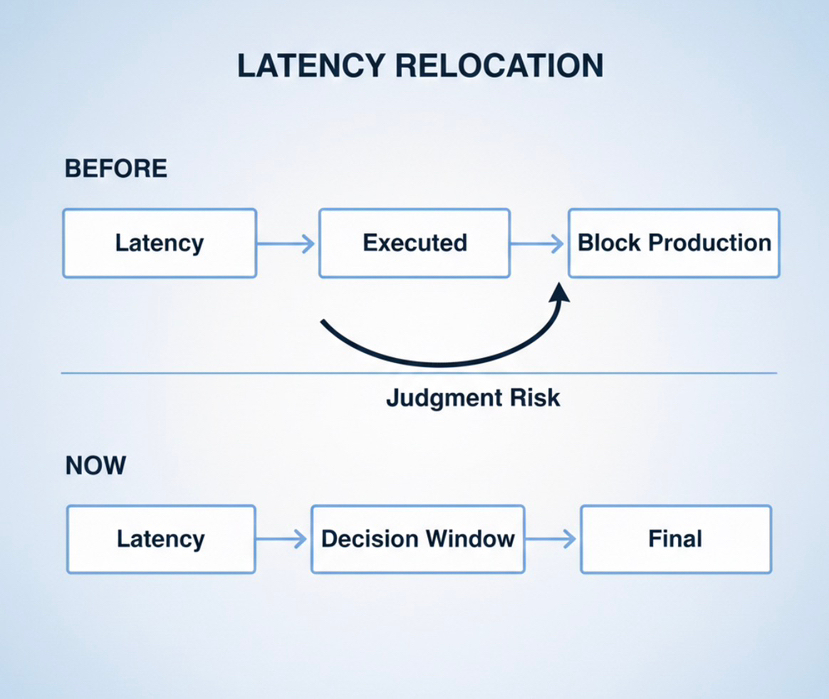
People call this real-time DeFi.
What it really is: latency moving upstream into human decisions.
Speed stops being the edge.
Knowing when you’re allowed to trust it becomes one.
Sometimes the clocks line up quickly.
Sometimes they don’t — and you’re already exposed while they negotiate.